A Cat’s Favorite Person: How to Recognize Your Bond

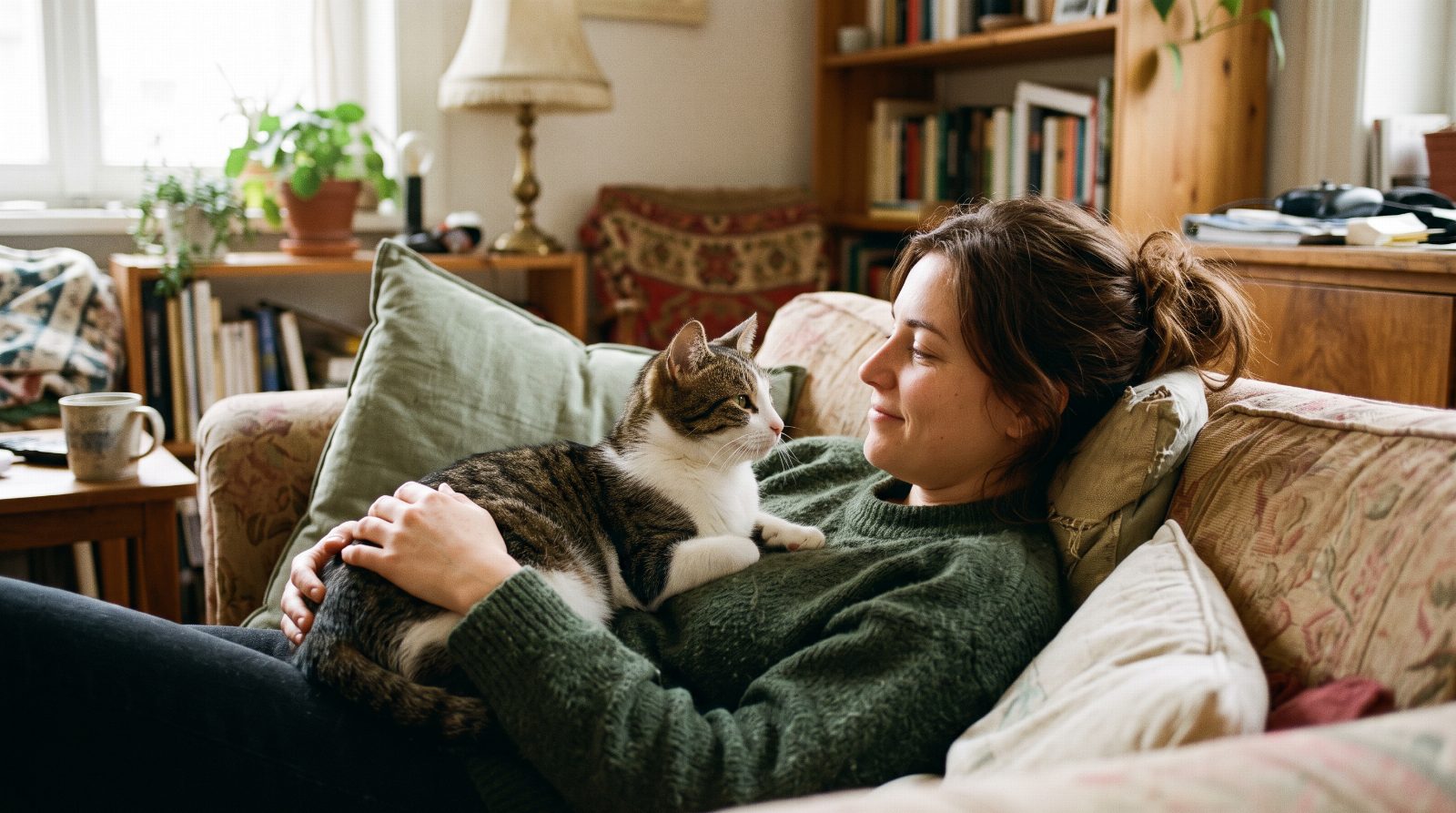
Does your cat always approach the same guest? Does she settle on one particular lap in the evening and ignore the other one? Does she wait outside a door, but only for one person in the household? And have you ever wondered whether you are actually her number one?
Published: 31 July 2026. Last updated: 1 August 2026. By the Canefelis editorial team. We compare everyday experiences shared by cat guardians with publicly available research and professional guidance.
If that last question made you pause, you are not alone. Many people search for exactly this, often with a slightly embarrassed feeling. There is no need to be embarrassed. Cats show affection and trust in ways that are easy to miss when we expect dog-like enthusiasm.
A quick word about us, so you know who is writing: we make cat food, and questions about trust, attachment and favorite people come up repeatedly in our conversations with cat guardians.
For the central claims in this article, we checked what research actually shows. We also make it clear where a plausible explanation ends and folklore begins. It is the same approach we take to ingredient declarations: specific information instead of vague collective terms.
One figure challenges the old image of the indifferent cat. In a widely discussed 2019 study, roughly two thirds of the cats showed a secure attachment pattern: 64.3 percent of kittens and 65.8 percent of adult cats.
The researchers used a secure-base test related to tests used with young children and dogs. An earlier study reached a different conclusion, and researchers still debate how neatly this model applies to cats. It is an important result, but not the final word on feline attachment.
This guide explains how closeness develops, which repeated behaviors may point to trust, why some cats approach guests who do not like cats, what sleeping beside you may mean, and what you can do if your cat appears to prefer someone else.
The key points in 30 seconds
- Attachment is visible in repeated patterns, not in one isolated gesture.
- Choice, predictability and respected boundaries support trust.
- Cats can distinguish familiar voices and names, and they may respond to slow blinking.
- Feeding is part of a routine, but food alone does not decide who becomes the favorite person.
- Sudden withdrawal together with appetite or behavior changes should be checked by a veterinarian.
A cat’s favorite person: what does research show?
Many cats form an especially close relationship with one person and can use a familiar human as a secure base. Research supports the existence of attachment patterns, but it does not prove that every cat places all household members in a fixed ranking from most to least loved.
The idea of a secure base is simple. A cat may explore more confidently when a trusted person is nearby and return to that person when something becomes uncomfortable. This behavior can be a sign of attachment that goes beyond a basic habit or the expectation of food.
One point surprises many people: the person who fills the bowl is not automatically the cat’s favorite. Feeding creates a positive and predictable expectation, but feeding alone does not make someone the most important source of safety, play, comfort or choice.
How does closeness with a favorite person develop?
Closeness usually grows through many repeated experiences. The cat can begin and end contact, the person responds predictably, boundaries are respected, and both share calm moments or play. Feeding may be part of that routine, but it does not determine attachment on its own.

Predictability matters. A person whose reactions are consistent is easier for a cat to understand, and familiar patterns can feel safer. Sudden noise, raised voices, rough handling or unexpected grabbing can make trust harder to build even when the person means well.
Respecting boundaries matters too. Many cats seek out people who reliably stop touching them when they have had enough. The favorite person is not necessarily the person who pets the cat most, but often the person who notices the earliest request for space.
Shared activity also helps. Alongside gentle contact, regular interactive play gives you a positive role in your cat’s day. Ten minutes with a wand toy is our practical suggestion rather than a number taken from a study. Two shorter sessions may suit some cats better.
Early experience influences later behavior. Kittens that have friendly contact with people during their early socialization period often find human company easier later. That does not prove that an adult cat will prefer the exact type of person she met as a kitten.
This may explain why a cat sometimes seeks the quietest person in the family rather than the person who follows her around most eagerly. From a cat’s perspective, a calm person who does nothing can be offering something valuable: room to choose.
Saveable list 1: nine signs of trust
How can you tell that you are her trusted person?
Do not rely on one sign. Look for a pattern that repeats in different situations. Voluntarily seeking your company, relaxing beside you, greeting you with an upright tail and checking your response when uncertain can all support the idea that your cat trusts you.

- She genuinely relaxes near you: she lies on her side, stretches, sleeps deeply or turns her back to you.
- She looks at you before approaching something unfamiliar.
- She greets you with an upright tail and rubs her head or cheek against you.
- She grooms herself beside you, or occasionally grooms you.
- She may not sit on you, but she stays in the same room and keeps you in sight.
One poor measure is the amount of lap time. Some cats simply are not lap cats. A cat who chooses the same room, sleeps deeply nearby or comes to you when unsure may show trust without ever settling on your knees.
How were attachment patterns described in the test?
These categories describe behavior in a specific standardized situation. They are not a home diagnostic tool, and one scene from everyday life cannot reliably identify a cat’s attachment pattern. The labels are useful for research, but they should not become character judgments.
The study distinguished a secure pattern from several insecure patterns. An insecurely attached cat is still attached. Researchers described three more common patterns and also recorded a rare disorganized category.
Securely attached cats explored while their person was present, showed some distress when that person left, settled after the person returned and then resumed exploring. This was the most common pattern in the 2019 study.
Insecure-ambivalent cats stayed intensely focused on their person. The behavior could look exceptionally affectionate, but it was accompanied by tension that did not settle easily after the person returned.
Insecure-avoidant cats showed little visible contact when the person returned and could appear indifferent. That did not automatically mean that no attachment existed. With this pattern, attachment can be easy to overlook because it is expressed less openly.
The pattern is not a diagnosis or a verdict on personality. Predictable routines, enough hiding places and contact without force are generally sensible. The study itself did not test whether those measures change an individual cat’s attachment pattern or how quickly change might happen.
Head bunting and cheek rubbing: the scent language of closeness
When your cat presses her forehead into your hand or rubs her cheek along your leg, it can express friendly social contact. It is also a form of scent communication. The behavior should be read in context rather than treated as a guaranteed declaration of love.

Cats have scent glands around the face, cheeks and base of the tail. When a cat rubs against you, she deposits some of her scent and picks up some of yours. Repeated contact can contribute to a familiar shared scent within a social group.
With familiar people, rubbing can be part of an established greeting. Some cats also rub against people they have only just met, so the gesture alone does not prove a unique bond. When it appears regularly within a broader pattern, it can be part of your familiar social exchange.
Some people worry when a cat starts grooming immediately after being stroked. It is not necessarily criticism. The cat may be redistributing scents, caring for her coat or calming herself. Look at the whole situation, including body tension, tail movement and whether she chose to stay.
Slow blinking: a signal tested in experiments
Slow blinking is more than an internet anecdote. Two experiments found that cats were more likely to narrow their eyes after a person did so, and more likely to approach an unfamiliar researcher after a slow-blink interaction than after a neutral facial expression.

In the first experiment, cats narrowed their eyes more often when their own guardian initiated the movement. In the second, an unfamiliar person slowly blinked at the cats. Afterwards, the cats approached that person more often than in the neutral-expression condition.
You can try it without forcing contact. Look toward the cat without staring, soften your eyes, blink slowly and then look slightly away. A less direct gaze may appear friendlier and less threatening. If the cat turns away or leaves, let that be the end of the interaction.
Why does your cat approach visitors who do not like cats?
Reserved visitors often avoid staring, leaning over the cat or reaching out immediately. That quieter body language may feel less threatening. The cat is probably not teasing anyone; she may simply approach the person who gives her the greatest control over distance and contact.
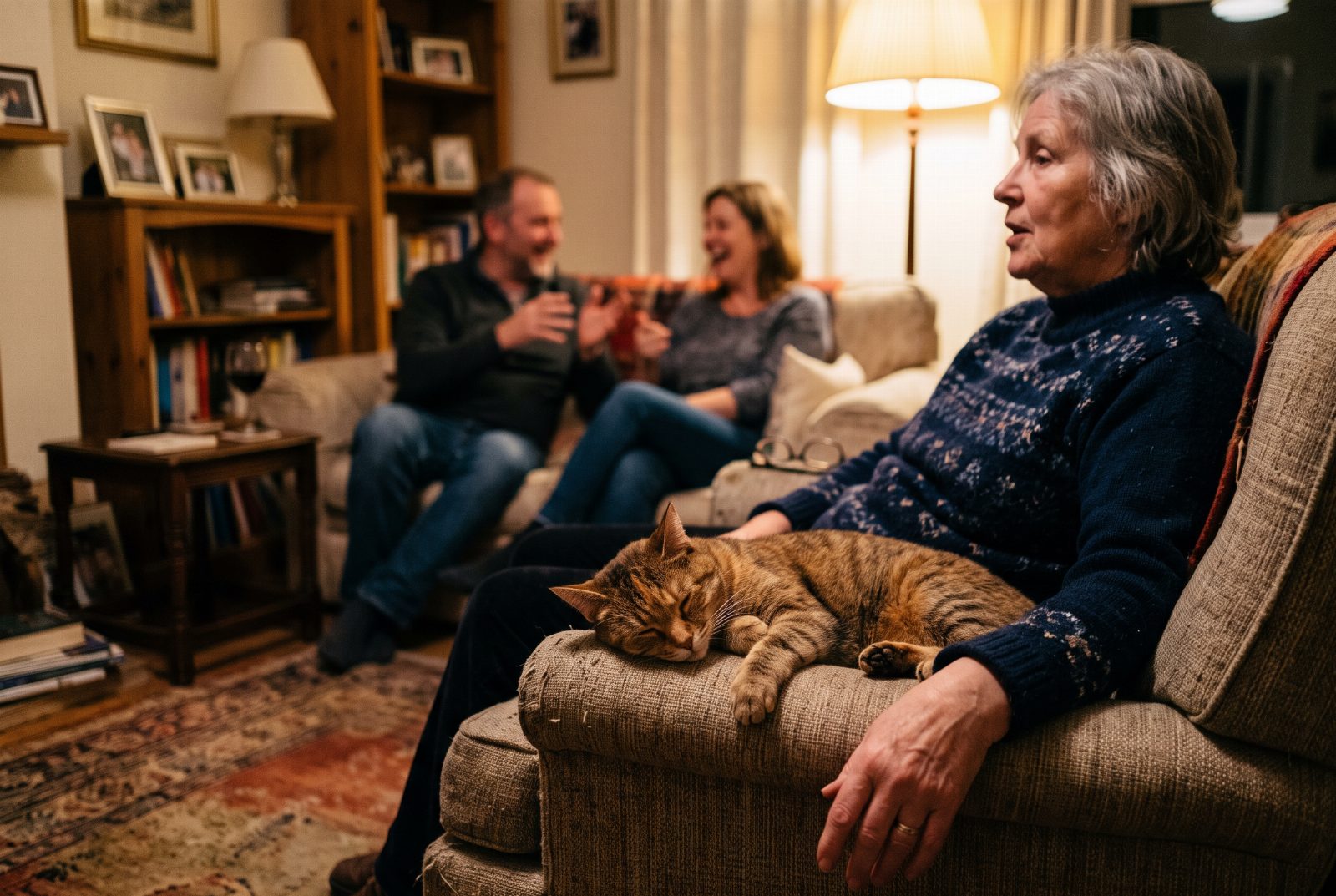
People who love cats often announce it at once. They approach, offer a hand, make eye contact and use a higher voice. From the cat’s perspective, that can be a great deal of attention from an unfamiliar person.
Someone who is not interested in cats may accidentally do exactly what many cats prefer: remain still, avoid staring and wait. Calm, distant behavior can feel less intrusive and therefore more inviting.
Your cat may also watch your reaction to the visitor. In a social-referencing study, most cats looked at their person before approaching an unfamiliar object, and some adjusted their behavior according to the person’s response. We cannot transfer that result directly to every visit, but it shows that cats can use a familiar person’s reaction as information.
Does my cat recognize my voice and her own name?
Studies show that cats can distinguish a familiar person’s voice from unfamiliar voices and can discriminate their own name from other words. Their response may be tiny, such as moving the ears or head. Recognition therefore does not mean that the cat will come when called.

In one study involving 20 cats, researchers played recordings of the cats’ names spoken by their guardians and by unfamiliar people. The cats responded differently to the familiar voice, mostly by turning their ears or head. Clear vocal or tail responses were uncommon.
Another study involving around 78 cats found that many could distinguish their own names from similar-sounding words. More than half responded with ear or head movements, while fewer than ten percent vocalized, moved their tails or changed position.
Your cat may hear and recognize you perfectly well. She simply never agreed that recognition comes with an obligation to appear on command.
Why does my cat sleep in my bed?
Your bed offers warmth, familiar scent and a soft resting place within a shared routine. If your cat chooses to sleep there, it often points to comfort, safety and habit. It can be a sign of trust, but it is not a flawless test of who her favorite person is.

Warmth is an obvious part of the appeal. Cats generally prefer warmer resting conditions than people do. A bed is often one of the warmest and softest places in the home, and you are a reliable source of body heat.
Sleep is also a vulnerable state. A cat who sleeps deeply beside you may feel safe in your presence. Familiar scent and a repeated bedtime routine can make the location even more predictable.
The exact position probably tells us less than popular explanations suggest. Some cats choose the pillow because it moves less; others sleep near the feet because leaving is easy. Both positions are normal, and neither ranks your relationship by itself.
What does it mean when your cat ignores you?
What looks like ignoring may be rest, tiredness, overstimulation or a request for space. Cats often respond subtly and do not answer every signal immediately. A sudden, clear change matters more, especially when withdrawal appears together with reduced appetite, poor grooming or unusual sensitivity.
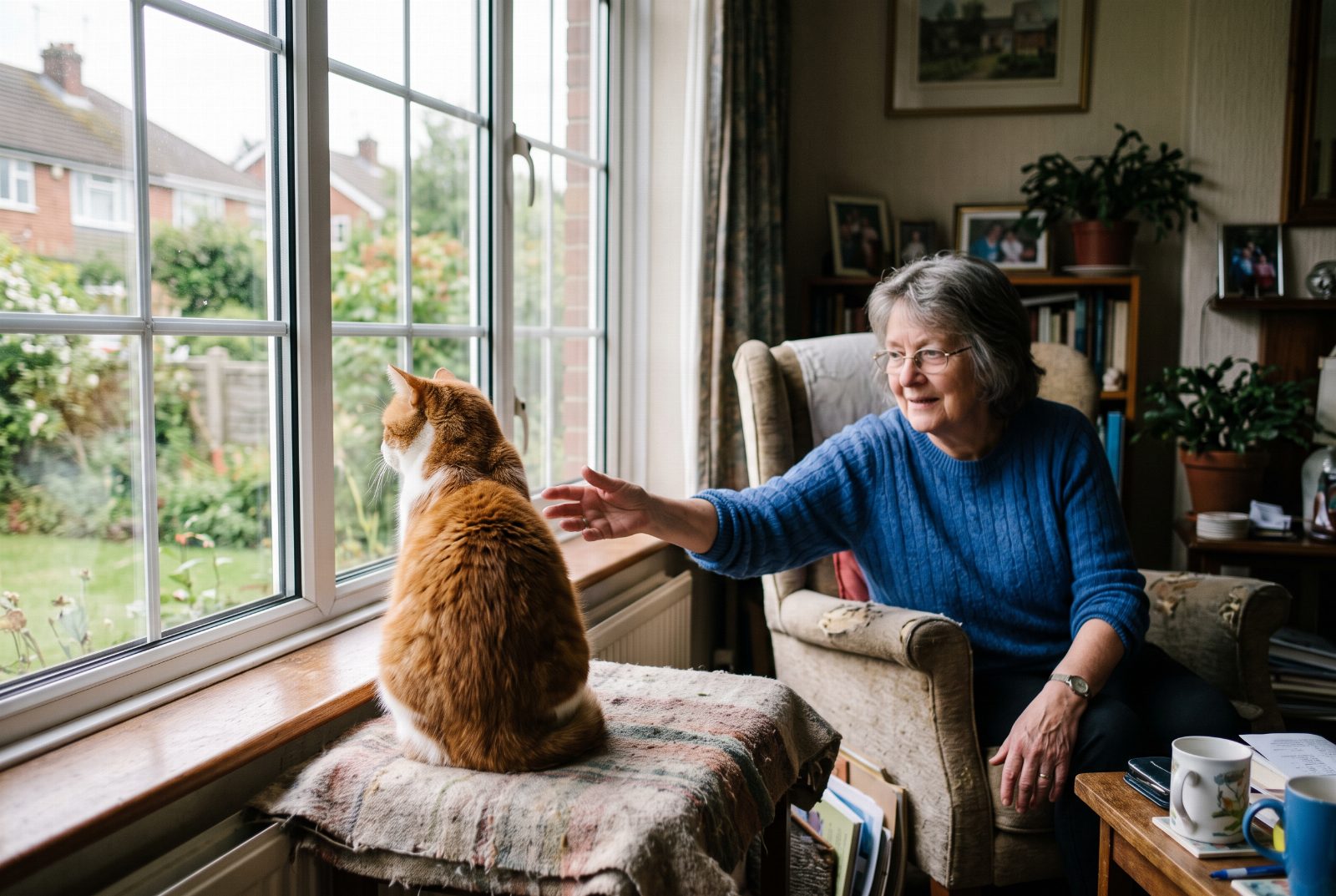
Cats also use smaller social signals than many people expect. If you wait for an enthusiastic greeting at the door, a quiet cat may seem indifferent. Her version may be an upright tail, a cheek rub or choosing to rest in the same room.
Attachment patterns differ, and some cats need more time and particularly predictable days. People often report that reserved cats later become exceptionally trusting, but that is an observation from experience rather than a result established by the attachment study.
WHEN TO SEE A VETERINARIAN
If a previously sociable cat suddenly withdraws, eats less, stops grooming or reacts differently to touch, treat it as a health or welfare question rather than a relationship problem. Those changes should be checked, not romanticized.
When your cat appears to prefer someone else
It can hurt, especially if you were the person who adopted her, cleans the litter tray and pays the veterinary bills. The most useful sentence here is simple: your cat’s current choice of resting place is not a judgment of your worth.
There are many ordinary possibilities. A deeper, quieter voice may feel less intrusive to some cats. A person who sits still and does not demand attention gives the cat more opportunities to initiate contact.
Someone who left the cat alone during her first days in the home may also have had an unintentionally easier start. That does not create a permanent ranking, and it does not mean that your own relationship cannot grow.
If you want to build more positive contact, focus less on winning through food and more on shared play. Use a wand toy at a predictable time and let the cat choose when to begin and stop. Regular play gives you a distinct, positive role in her daily life.
One reassuring point remains: where she lies in the evening does not automatically reveal whose reassurance she seeks when something makes her uncertain.
Saveable list 2: small habits that make trust easier
What strengthens the bond, and what does not?
The practical list is shorter than many people expect. Trust grows through reliable, low-pressure interactions rather than grand gestures. Choose habits that give your cat information and control, and avoid strategies that trap, wake, punish or physically hold her for your own reassurance.

Helpful: predictable times for food and play; ten minutes of wand play, perhaps split into two sessions; letting her approach; slow blinking instead of staring; stopping before contact becomes too much; raised places with a clear view.
Unhelpful: lifting her to force closeness; waking her because you have time; using treats as a substitute for attention; shutting her in a room with you; punishment intended to make her understand a rule after the event.
Punishment does not reliably explain which behavior you wanted. It can instead teach the cat that you, the room or the situation predicts something unpleasant. Prevention, redirection and a clear environment are usually more useful than a delayed consequence.
An unfamiliar cat keeps returning: what should you do?
Offer water and a quiet, safe place without immediately claiming the cat as your own. Check for a collar, ask nearby households and review lost-pet notices. A veterinary practice or shelter can scan a microchip. Avoid establishing permanent feeding before checking whether the cat has a home or special needs.
An unfamiliar cat may return to a place where she finds calm, water and somewhere to retreat. You can provide those basics at first without immediately creating a regular feeding routine.
Before deciding to keep her, arrange a chip scan, ask in local groups, check found-animal lists and post a clear photograph. Outdoor cats can travel surprising distances and are often assumed to be homeless while someone is searching only a few streets away.
If the cat truly needs a new home, let her settle before making an unnecessary food change. A new home and a new diet at the same time are two major changes rather than one.
What does folklore say about cats and their people?
There is no evidence for the claims in the following list. They belong here because few subjects attract as much folklore as the bond between cats and people, and because some of the stories are charming when they are clearly presented as stories.
- You do not choose the cat; the cat chooses the house.
- If she sleeps by your head, she guards your thoughts and dreams.
- If she lies on your chest, she takes away one worry.
- If she follows you from room to room, she is making sure nothing happens to you.
- If she brings home prey, she is paying the rent.
Only the final story begins with an observed behavior. Mother cats bring prey to their young and gradually introduce them to food and hunting. That does not prove that a household cat consciously treats a person as a kitten who needs hunting lessons. It is an appealing human interpretation, not an established intention.
The bowl as part of the relationship, and how Canefelis approaches it
Feeding is one of the moments that repeats every day. A calm, predictable routine can be useful, but no food creates attachment or makes one person the favorite. Choice, respected boundaries and many shared experiences remain more important for trust.
If your cat suddenly refuses familiar food, see our guide Cat Suddenly Won’t Eat Its Usual Food without confusing food acceptance with attachment.
For feeding to remain calm, the food must of course be accepted. Hesitation at the bowl can turn a simple routine into a daily negotiation, but it should never be interpreted as a verdict on the relationship.
Our cat range is called Cat’s Love purer Genuss. The chicken recipe declares 70 percent chicken breast, 8 percent chicken liver, 7 percent chicken heart and 5 percent egg.
It also contains peas, potatoes, carrots and linseed oil at 1.5 percent each; cabbage, apple and fish oil at 1 percent each; and 0.5 percent psyllium husk. The remaining 0.5 percent consists of declared additives such as taurine. According to the declaration, 99 percent of the protein is of animal origin and the food contains no grain.
Canefelis offers gently baked soft food for cats with a soft, moist texture. See each recipe for its composition.
What is written on the label is what is inside. Food alone does not create attachment, but a food that suits the individual cat can help keep an everyday feeding routine calm and predictable.
Would you like to compare textures?
If you want to test several recipes calmly, take a look at the Canefelis trial packs for cats. Whether a recipe suits her is decided by the individual cat; this is not a promise about attachment or feeding behavior.
Canefelis trial packs for cats
P.S. Trust does not come from a pouch. It grows through many small, reliable encounters.
Frequently asked questions
Why does my cat knead me with her paws?
Kneading begins in kittenhood during nursing. Many adult cats retain the movement on soft surfaces or when relaxed. Its later function is not fully understood. Habit, comfort and scent marking may all contribute, and the meaning can vary with the individual cat and the situation.
Why does my cat bite me while I am petting her?
The bite is often a late signal to stop rather than a sudden attack. Watch earlier for twitching skin, a lashing tail, ears turning back or a glance toward your hand. End the touch sooner and let the cat decide whether she wants to approach again.
Can a cat have more than one favorite person?
Yes. A cat can share different forms of closeness with different people, such as sleeping quietly with one person and playing with another. Both relationships can matter without a fixed ranking, and the cat does not have to prefer the same person in every situation.
Can a cat’s favorite person change?
Yes. Relationships may change when someone moves in or out, routines shift or another person begins spending more reliable, low-pressure time with the cat. It is not betrayal or a judgment. The cat is adapting to new experience, safety, availability and daily patterns.
Why does my cat sleep under the duvet?
Under the duvet, a cat finds warmth, darkness and a den-like space. It can be comfortable and calming as long as she can enter and leave freely. Never hold her underneath it, and ensure that kittens, small cats or unwell animals always have enough air and room.
Can an adult adopted cat still form a bond?
Yes. Adult cats can develop close social relationships with people. The pace depends on personality, earlier experience, the environment and the behavior of the new trusted person. Provide safe hiding places, a predictable routine and the freedom to initiate contact without being pursued or held.
Does my cat miss me when I am away?
Cats notice the absence and return of a familiar person and may adjust their daily routine. We cannot know whether their experience matches human longing. We can observe contact seeking, vocalization, activity and a return to familiar routines, but we cannot name the emotion with certainty.
Why does my cat follow me into the bathroom?
Bathrooms are small, quiet and full of familiar routines. Some cats follow out of curiosity, because of the closed door or because they have learned that they receive undivided attention there. It may show closeness, but it does not by itself prove separation anxiety or special status.
Why does my cat sleep on my head?
Near your head, a cat finds warmth, familiar scent and often less movement than around your arms and legs. It may feel comfortable and secure. If it disrupts your sleep, offer a warm place beside the pillow and move her gently rather than punishing her.
Why does my cat bring prey home?
Bringing prey home is part of normal hunting behavior in cats that go outdoors. The popular idea that the cat is giving a gift or trying to teach a person is not firmly established. A protected place to handle prey and territorial habits may also influence the behavior.
Does my cat notice how I feel?
Cats can notice changes in voice, facial expression, posture and behavior, and they may adjust their response. Studies suggest that cats distinguish emotional signals and use social information. This shows sensitive observation in a particular moment, not mind reading or a reliable diagnosis of human emotion.
Tell us about your cat
Over the next few days, notice which small signals your cat repeats: proximity, gaze, greeting, withdrawal and resting together. If you would like, tell us in the comments how you recognize your bond without turning one scene into a permanent ranking.
Public sources
- Vitale, K. R.; Behnke, A. C.; Udell, M. A. R.: Attachment bonds between domestic cats and humans. Current Biology, 2019.
- Humphrey, T. et al.: The role of cat eye narrowing movements in cat-human communication. Scientific Reports, 2020.
- Saito, A.; Shinozuka, K.: Vocal recognition of owners by domestic cats. Animal Cognition, 2013.
- Saito, A. et al.: Domestic cats discriminate their names from other words. Scientific Reports, 2019.
- Merola, I. et al.: Social referencing and cat-human communication. Animal Cognition, 2015.
- Quaranta, A. et al.: Emotion Recognition in Cats. Animals, 2020.
- Potter, A.; Mills, D. S.: Domestic Cats Do Not Show Signs of Secure Attachment to Their Owners. PLOS ONE, 2015.
- Ellis, S. L. H. et al.: AAFP and ISFM Feline Environmental Needs Guidelines. Journal of Feline Medicine and Surgery, 2013.
- Fritz, J. B. et al.: Functional analysis and treatment of petting-induced aggression in a domestic cat. Journal of Applied Behavior Analysis, 2022.
- Caro, T. M.: Predatory behaviour in domestic cat mothers. Behavioral and Neural Biology, 1980.
Read more