Can Dogs Sense Storms, Stress and Sadness? Myths and Evidence

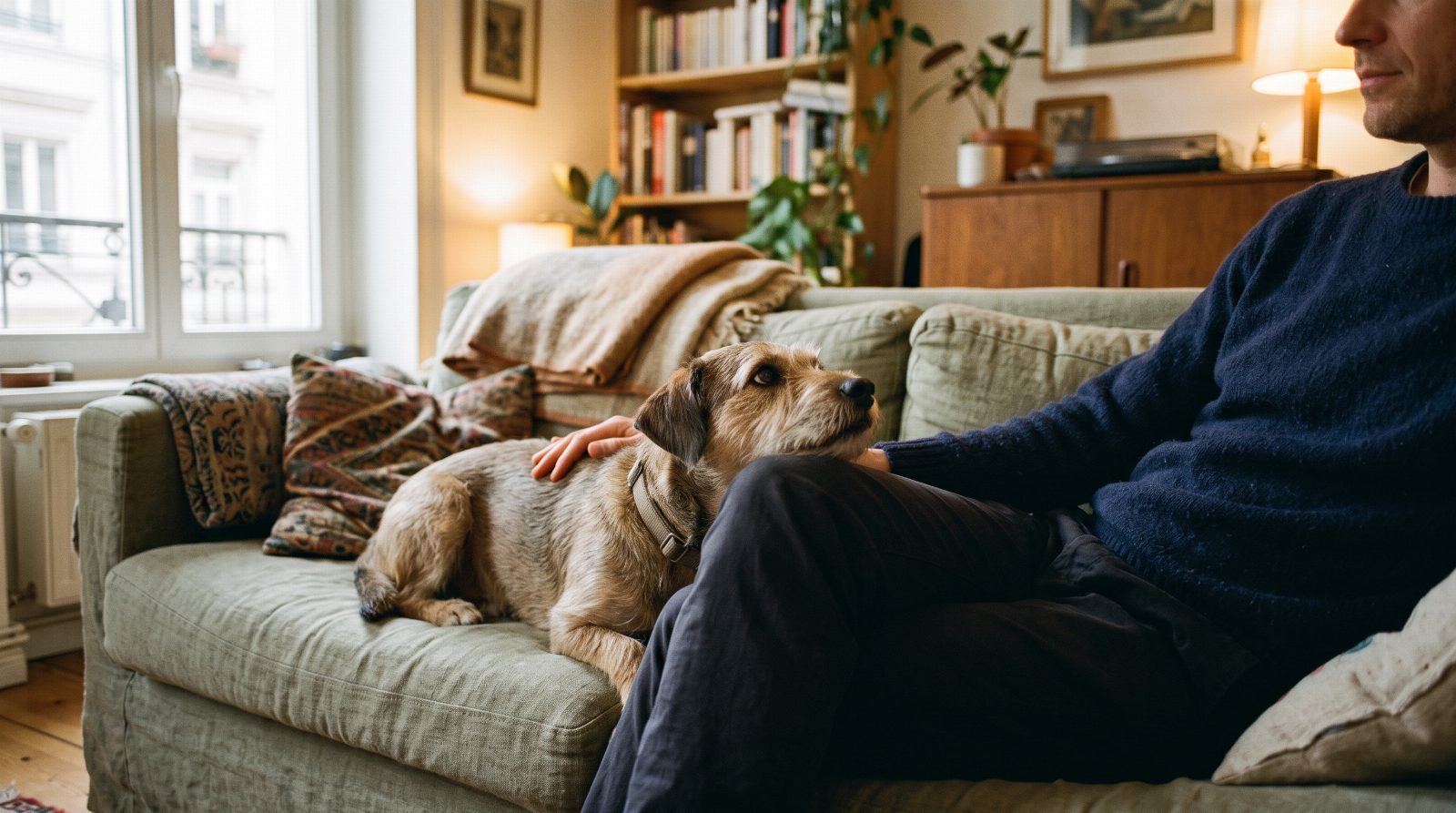
Does your dog wait restlessly by the door for an hour before a storm? Does he come to you on the day everything went wrong, before you have said a word? Does he start growling at certain visitors when nothing has actually happened? And is he suddenly lying somewhere different from usual?
No wonder people have credited dogs with supernatural powers for thousands of years.
At Canefelis we would rather work with numbers than with big words. So we took the old stories one at a time and looked up what has actually been measured for each of them. On some points, nothing of the myth survives. On others, the reality is far more impressive.
You will find out what your dog really picks up before a storm, and why he notices when you are having a hard time. What lies behind the feeling that he can spot “negative energy”. And where coat colour genuinely counts. The last point has practical consequences.
- A dog does not sense storms magically; he detects pressure, sound, scent and possibly static changes.
- Dogs can recognise acute stress cues across scent, voice, face and movement.
- These abilities are not mind reading, diagnosis or prediction of illness and death.
- Coat colour does not determine character; merle and areas with little pigment are specific genetic considerations.
- Sudden or severe behavioural change needs context and, when appropriate, professional help.
Why People Have Credited Dogs With the Supernatural for Millennia
In many old cultures the dog is the guardian at the threshold. In ancient Egypt, the jackal-headed Anubis, who accompanies the dead. In Greek mythology, Cerberus at the entrance to the underworld. In Norse tradition, Garm in front of the cave mouth.
Always the same role: he stands where one world stops and another begins, and he notices when something is coming.
That is not invented out of thin air. It describes something people watched every day. The dog lifts his head before you hear anything at all. He points his ears in a direction where, as far as you can tell, there is nothing. And most of the time, somebody really did turn up.
If you have no explanation, you call it second sight. If you have one, you call it ears and a nose.
Can Dogs Sense Storms? What They Really Detect
Dogs may react before a storm because they detect several early signals: changes in air pressure, distant sounds and vibrations, unusual scents and shifts in household behaviour. Static electricity is a possible contributor. None of this requires a sixth sense, and individual dogs vary greatly.
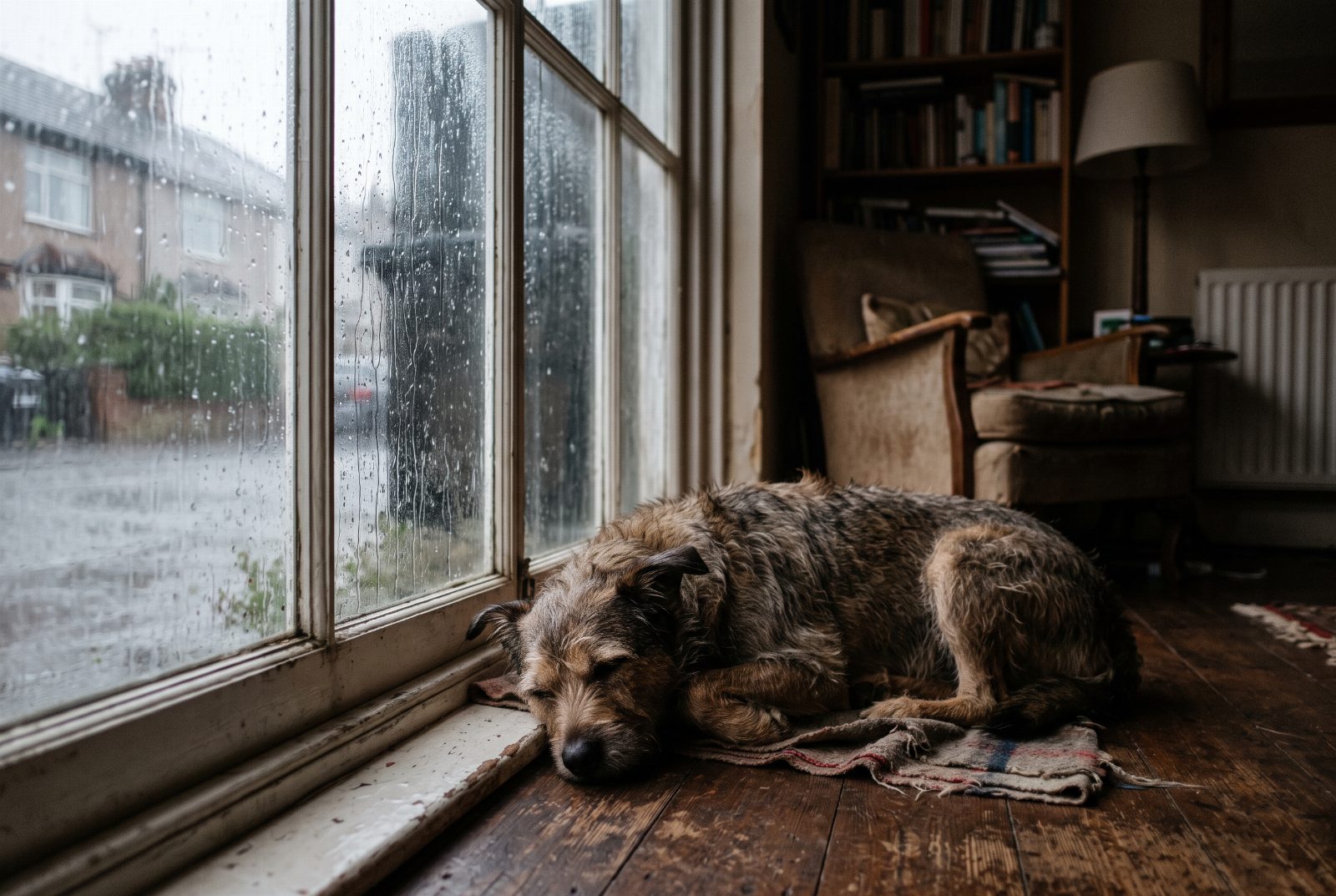
- Air pressure. A storm announces itself with a drop in air pressure. Some dogs may react before people notice the change in weather.
- Infrasound. Storms produce distant sounds and vibrations that can travel a long way. Dogs may pick up signals that people miss.
- Static charge. In a storm, coat hair picks up a static charge. Big dogs and dogs with long or double coats notice it particularly, sometimes with small discharges.
- Smell. Before rain there is ozone in the air, plus that typical smell of rain hitting dry ground. For a dog’s nose, none of this is subtle.
The same explanation fits a second question people often ask: can a dog sense an earthquake? Here too the assumption is a combination of infrasound and fine vibrations. The evidence is far weaker than it is for storms, so it stays an assumption.
In practice this means that when your dog gets restless before a storm, he is not doing anything mystical. He simply has more information than you do. What helps is a retreat he gets to choose himself, usually somewhere narrow, dark and low down.
What Helps a Dog During a Storm?
During a storm, a self-chosen sheltered place, softened background noise and a calm familiar person can help. Do not pull a dog out of hiding, and allow contact if he seeks it. Severe panic should be discussed with a veterinarian before the next storm season.
- Keep a familiar resting place available before the storm begins.
- Close windows and curtains if that reduces sound and flashes.
- Stay calm and let the dog choose distance or contact.
- Do not force exposure or punish fearful behaviour.
Why Your Dog Notices When You Are Having a Hard Time
A dog can detect changes in breathing, sweat, voice, posture and movement. In a controlled scent study, four dogs distinguished stress samples from baseline samples well above chance. That demonstrates sensitive perception of acute signals, but not mind reading or a reliable diagnosis.

In a study at Queen’s University Belfast, people gave samples of breath and sweat first at rest, then after a stressful arithmetic task. Four dogs then had to tell the stress sample apart from the calm sample, under double-blind conditions.
The hit rate ran between 90 and almost 97 percent, 93.75 percent overall across 720 trials.
So an acute stress response changes the volatile compounds in breath and sweat clearly enough that a dog can smell the difference. Without seeing you. Without hearing you.
When your dog comes over on a bad day before you have said anything, he is not reading you supernaturally. He is smelling you.
Can My Dog Sense Sadness?
A dog may not identify the abstract state of sadness, but he can combine relevant cues from voice, face, posture and scent. Studies show that dogs integrate emotional information across senses. His response may be attentive, but it is not mind reading or proof of a person’s intentions.
In one study, 17 dogs were shown two photographs at the same time, a friendly face and an angry one, together with a voice from the same person, either positive or negative. The dogs had not been trained for this, and the faces were strangers to them.
The dogs looked noticeably longer at the face that matched the mood of the voice. This held for human faces and for other dogs’ faces.
Combining two senses and reading a mood out of them had previously only been demonstrated in humans. It means dogs hold an internal idea of “friendly” and “angry” rather than just reacting to single signals.
So your dog is not reading an aura. He is reading a face and a voice, and he knows what the two mean together.
“Negative Energy”: What Lies Behind That Feeling
Plenty of owners know the situation. A visitor arrives, and the dog dislikes them from the first second. Later it turns out that something really was off about that person. So does the dog recognise bad people?
No, but the explanation is almost more unsettling. The dog is assessing several things at once:
- How the person smells, including the compounds that show up in sweat under tension.
- How they move, how directly they approach, how loud and how high the voice is.
- Whether their body language and their tone of voice match. People hiding something are often inconsistent here.
- And finally the deciding factor: what your reaction to this person tells him.
That last point is the most underrated. If you are unconsciously tense around a visitor, your dog smells exactly that on you before the guest has done anything at all. He is not judging the guest. He is judging your reaction to the guest, and those are two different things.
None of this has anything to do with energy. What the dog processes are scent compounds, movement patterns and vocal pitch, at a level of detail people cannot match.
The Sense of Smell That Starts It All
To put those earlier numbers in context: depending on the breed, a dog has roughly 220 to 300 million olfactory cells. A human has around five to six million.
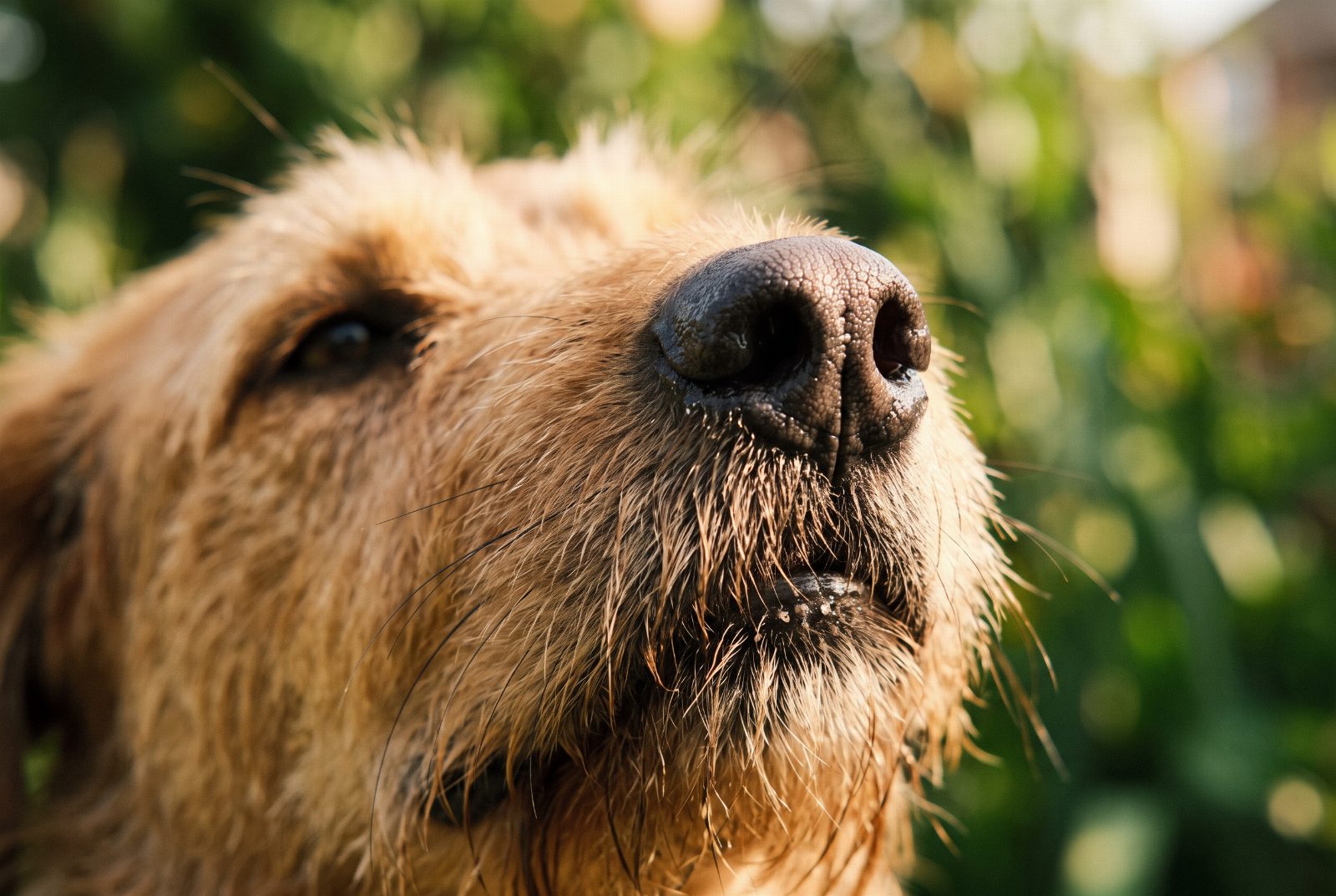
On top of that, a considerably larger share of his brain is occupied with processing smells. A dog does not simply smell better than we do. He takes in the world in a different primary language.
That is why search dogs work, and why conservation detection dogs work, meaning dogs trained to find a particular animal or plant species in the field. They do not rely on miracles, but on training to detect a specific scent.
And it is why the nose is no side issue at the bowl either. A dog often evaluates food with the nose first.
Can a Dog Smell Illness?
Specially trained dogs have distinguished certain scent samples in individual studies. Methods and results vary, and a family dog is not a diagnostic device. Persistent sniffing does not replace an examination. Medical or veterinary advice is the right step when a person or animal may be unwell.
There are studies in which specially trained dogs identified certain conditions from scent samples at better than chance. It is an active research field. At the same time, the review papers are clear. Study quality varies a great deal. Training and testing methods are barely comparable. And the results are not sufficient for clinical use.
THIS IS NOT A DIAGNOSIS
Above all: these are specialists trained over months under controlled conditions. Your dog at home is not a diagnostic device, and his behaviour is not a finding.
If your dog sniffs conspicuously often at one particular spot and you are worried about yourself, go to your doctor, not to a forum. If you are worried about him, go to your vet. That is the whole of the advice here, and it is deliberately unglamorous.
The Dog as Protector: From Spirit Guardian to Early Warning System
In old folk belief, the dog kept evil spirits away from the house, and it was said that witches avoided yards with a dog in them. Travelling healers took dogs along because they warned of beings you could not see yourself.

Translated into the present, something quite concrete is left over. A dog hears footsteps that do not exist yet as far as you are concerned. He smells a person before they come round the corner. He notices when a sound does not fit the usual pattern.
The myth is not wrong in its observation. It is only wrong in its explanation. No dog drives off spirits. But a dog reliably notices that something is different from normal, and for thousands of years that was exactly what mattered to people.
What Research Says About Children Growing Up With a Dog
The old belief says a dog’s aura is especially good for children. Research points to a more practical explanation.
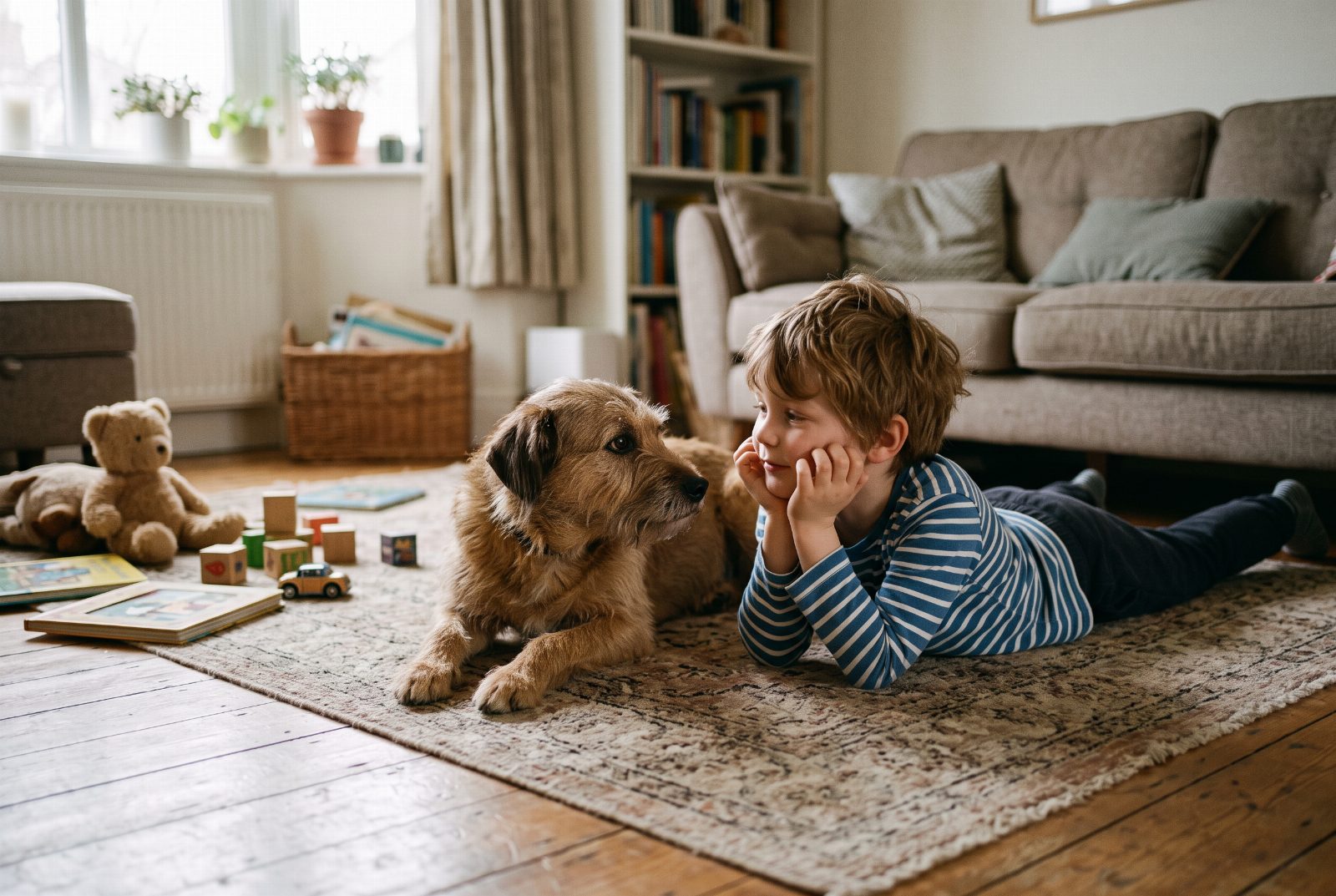
In an Australian survey of 1,646 households, 686 of them with a dog, parents were asked about the social and emotional development of their two to five year old children. Children from households with a dog had fewer conflicts with other children, fewer behavioural difficulties and more pronounced prosocial behaviour.
Within the dog-owning households there was a second finding. What mattered was not only that a dog was present, but that something was done with him. At least one walk together per week, at least three sessions of active play per week.
This is an observational study, so it proves no cause. But the association is there, and it points somewhere practical: it is not the dog in the house that does the work, it is the shared time.
Does a Dog’s Coat Colour Say Anything About Character?
Coat colour does not reliably predict a dog’s character. Findings from one breed cannot be applied to all dogs. Behaviour develops through genetics, early experience, socialisation, training and daily life. Judge the individual dog, not his colour or an old saying.
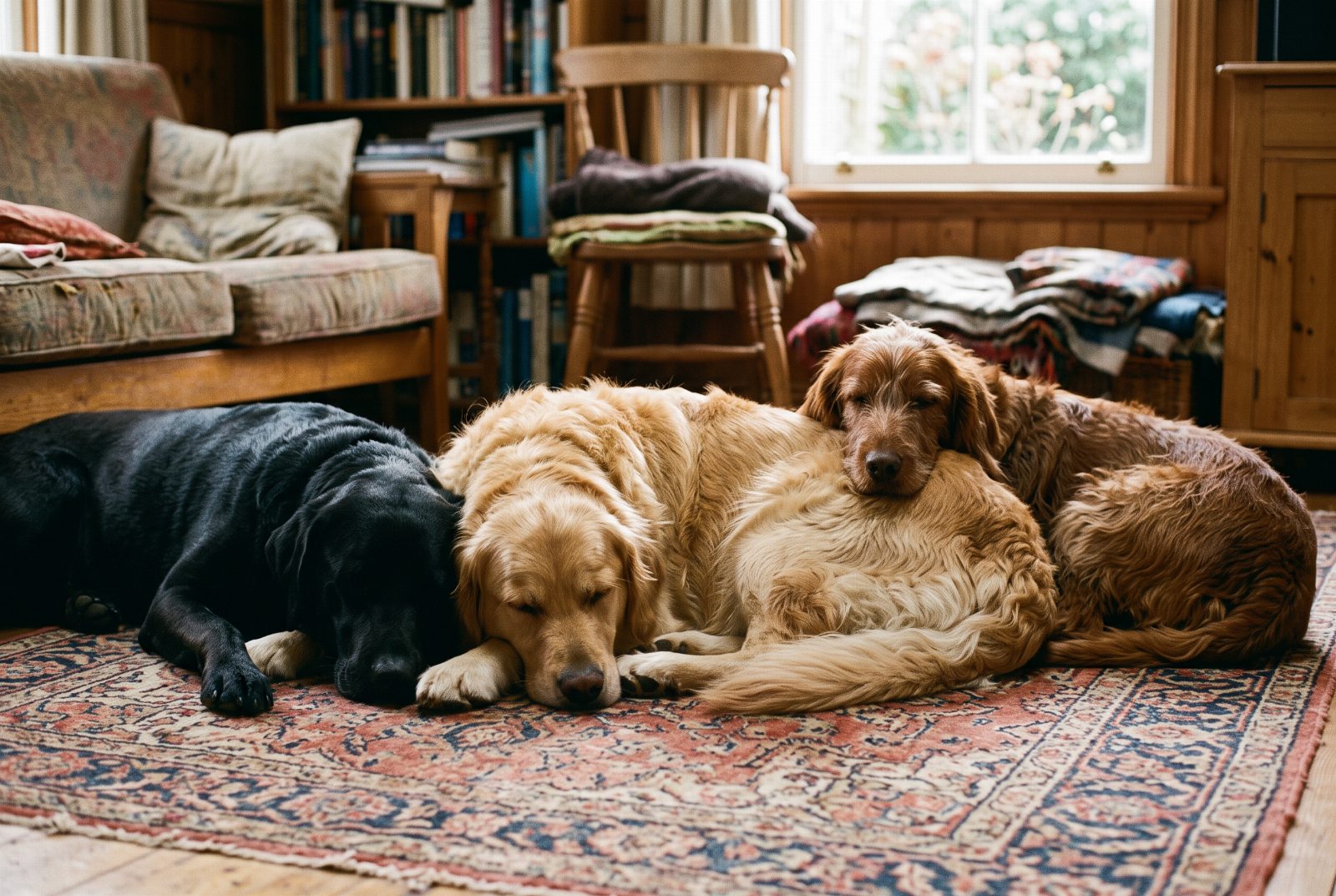
Almost none of it, and the little that does is so narrowly bounded that you cannot build a rule out of it.
There are isolated breed-specific findings. In the English Cocker Spaniel it has been reported more than once that golden and red animals showed aggressive behaviour more often than black ones. In a large British analysis of veterinary practice data, the frequency was around 12 percent in golden Cockers and around 6 percent in red and black ones.
That is a finding about one breed, from one population, with all the uncertainty that comes with owner-reported data. It is not a statement about dogs in general, and it is certainly not a statement about the individual dog in front of you.
What actually shapes behaviour is well known: the genetics of the parent animals, the imprinting window in the first weeks of life, socialisation, training, and what the dog has experienced since. Colour is not on the list.
The Black Dog in Folklore
Stories about black dogs range from protective guardians to threatening apparitions. The contradiction is revealing: the same coat can symbolise safety in one place and danger in another.
Modern shelter research does not support a character rule based on dark fur. Photography and human expectations can still affect how quickly a face is read and how an animal is judged.
For the parallel history, read why the black cat is still linked with superstition.
What Else Folklore Claims About Dogs
There is no evidence for any of the following. We collect them because they belong to the story people have been telling about dogs for centuries, and because one of them ends up surprisingly close to something true.
- Black dogs conduct energy away and protect the house from storms and floods.
- Red dogs keep the evil eye at bay and draw in prosperity. Their barking is said to announce good news.
- If a white dog barks at you, a windfall is coming your way. Three white animals in one day mean luck.
- Two-coloured and three-coloured dogs double or triple the luck in the household.
- White markings above the eyes make a dog a guardian against everything negative.
- A dog in the yard keeps witches away. Travelling healers took dogs on the road for that reason.
- A dog’s aura suits children particularly well.
On two of these points, folk belief touched on something real and then explained it wrongly. The one about children has a sober equivalent further up, and it depends not on an aura but on shared time.
And the white markings do mean something. Just nothing about guardians. Exactly what, that is in the next section, and it is the most practical part of this text.
This list does not include claims that a dog can predict illness or death. There is no evidence for it, and for someone going through a hard time a sentence like that is a burden nobody needs.
Where Coat Colour Really Counts: Merle and a High Proportion of White
And now the point where folklore noticed coat colour but interpreted it in the wrong way. Because coat colour genuinely is relevant, it just has nothing to do with luck or character.
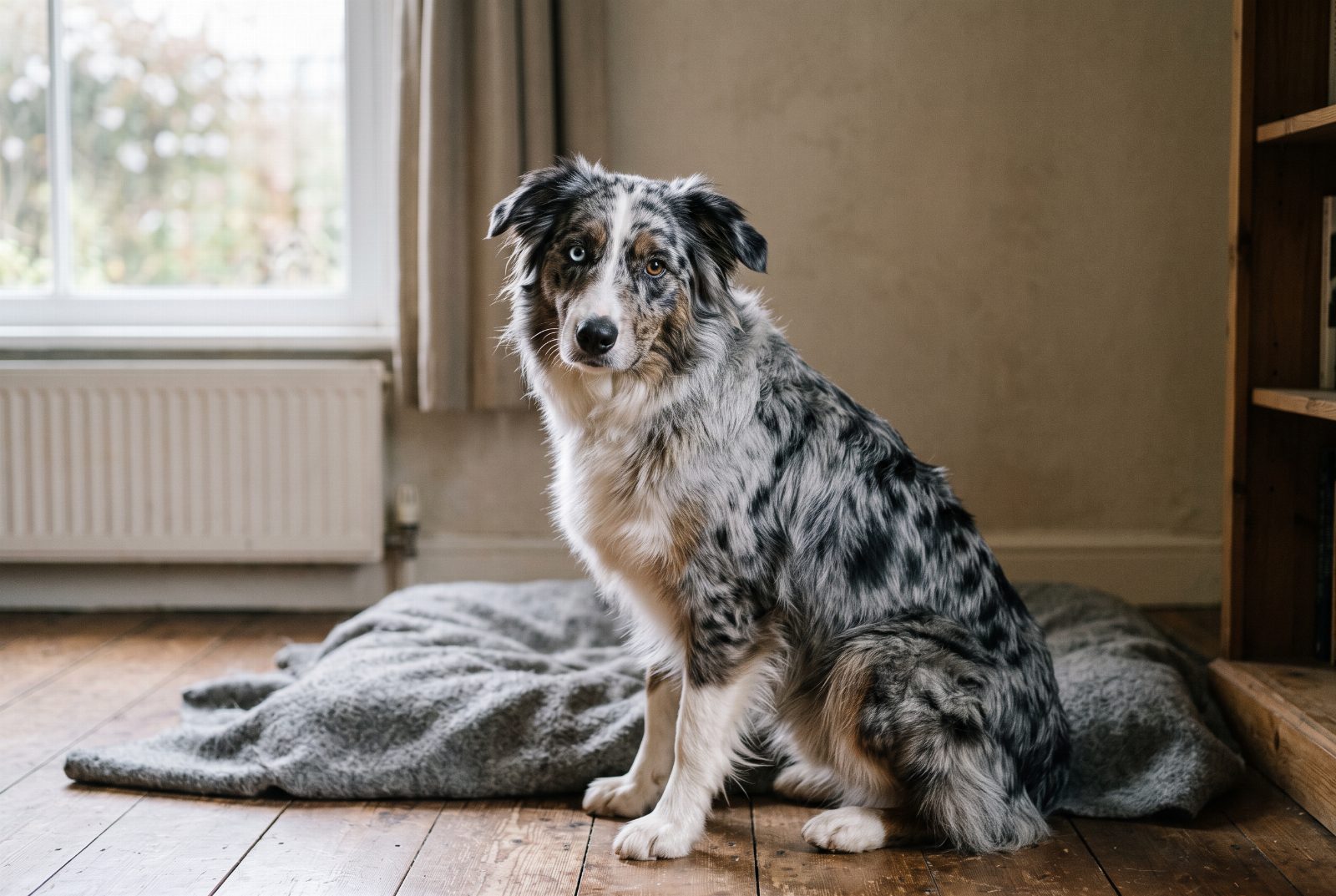
In most breeds, congenital deafness is linked to two pigment genes: merle and piebald, precisely the genes responsible for white or lightened areas of coat.
The mechanism is concrete. Inside the cochlea sits a pigment-bearing tissue that is needed to supply the hair cells. Where the pigment is missing, the sensory cells die off early. This can affect one ear or both.
The risk is especially clear when two merle dogs are bred. A quarter of the offspring then inherit the double merle configuration, often with an almost white coat and blue eyes, frequently with deafness and vision problems. This is why pairing two merle dogs is regarded as problematic in breeding.
So if you are choosing a puppy with a lot of white, merle markings or blue eyes, the sensible question is not what luck the colour brings. The sensible question is whether the hearing has been tested and how the parents were paired. That is the colour question that really means something.
Adopting a Shelter Dog: Using the 3-3-3 Rule as a Guide
The familiar 3-3-3 rule describes roughly three days to decompress, three weeks to learn a routine and three months to feel settled. It is a guide, not a biological deadline.
- Give the dog a quiet, predictable place to rest.
- Keep walks, meals and introductions simple at first.
- Increase demands gradually instead of testing everything immediately.
- Ask the shelter and qualified professionals about the individual dog.
Some dogs need less time and others much more. Appetite, sleep, toileting and body language are more useful than counting calendar days.
When Your Dog Suddenly Behaves Differently
Folk belief reads a change in behaviour as a sign. Usually it is something far more tangible: a response to the fact that daily life has changed.
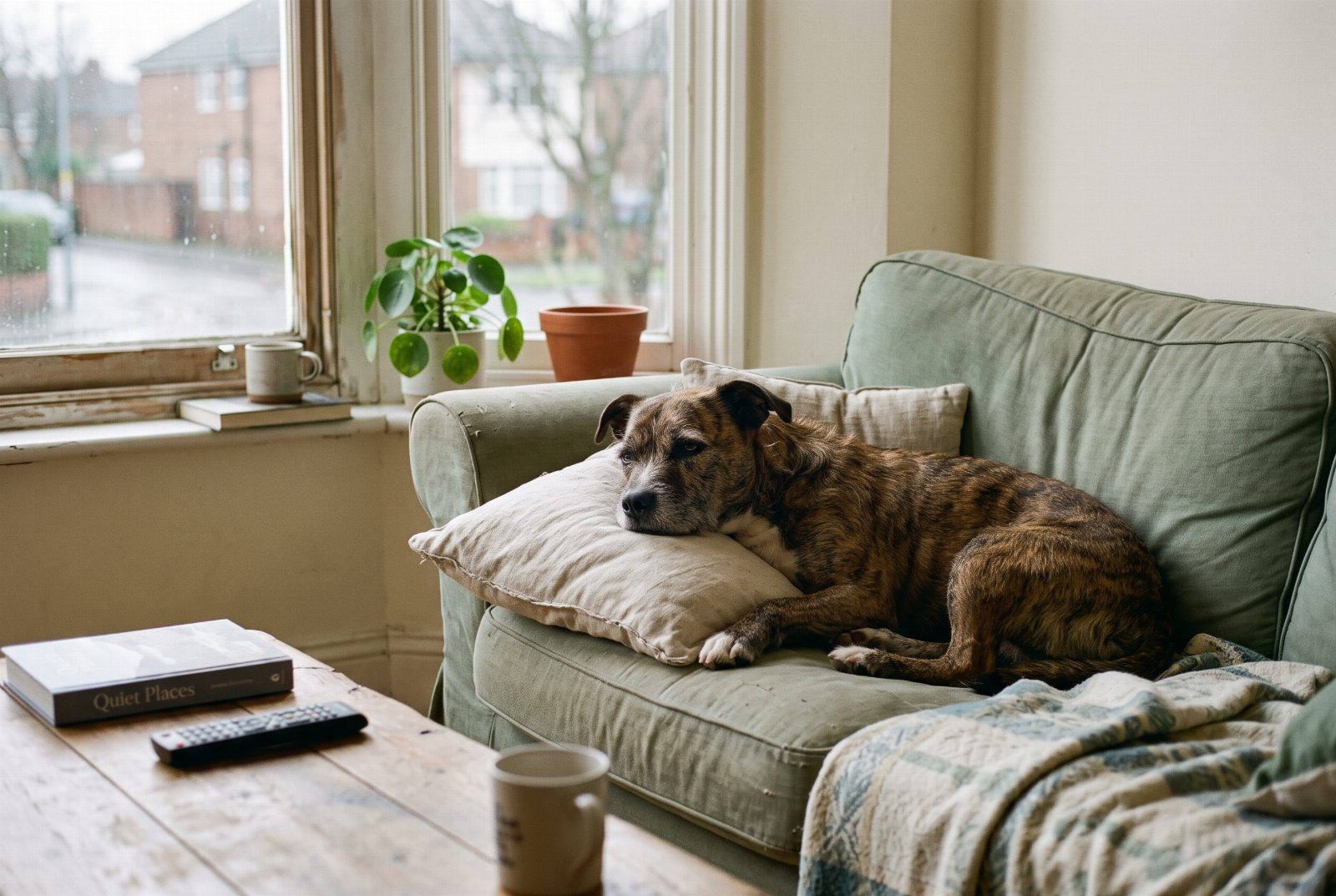
Dogs need predictability. The same walk times, the same feeding times, the same people, a spot that belongs to him. When there is stress in the household, all of that shifts at once, without anyone deciding it. Things get louder. The walk gets shorter. Dinner comes later.
Add what we saw earlier: he smells your tension anyway. A dog who behaves differently during a difficult phase is not predicting your fate. He may be responding to changed routines and to your tension.
What helps is straightforward: fixed times, a retreat that nobody disturbs, and a walk that happens even on a bad day.
GO TO THE VET
If eating less, vomiting, withdrawal or a change in weight comes with it, though, the order is clear: the vet first, everything else afterwards.
A short routine check:
- What changed in the previous 24 to 48 hours?
- Did meal, walk or sleep times move?
- Were there new people, scents or sounds?
- Are eating, drinking, toileting and movement otherwise unchanged?
What the Bowl Tells You, and How We Handle It at Canefelis
Because a dog sorts the world through his nose first, the bowl is one of the places where you spot a change fastest.
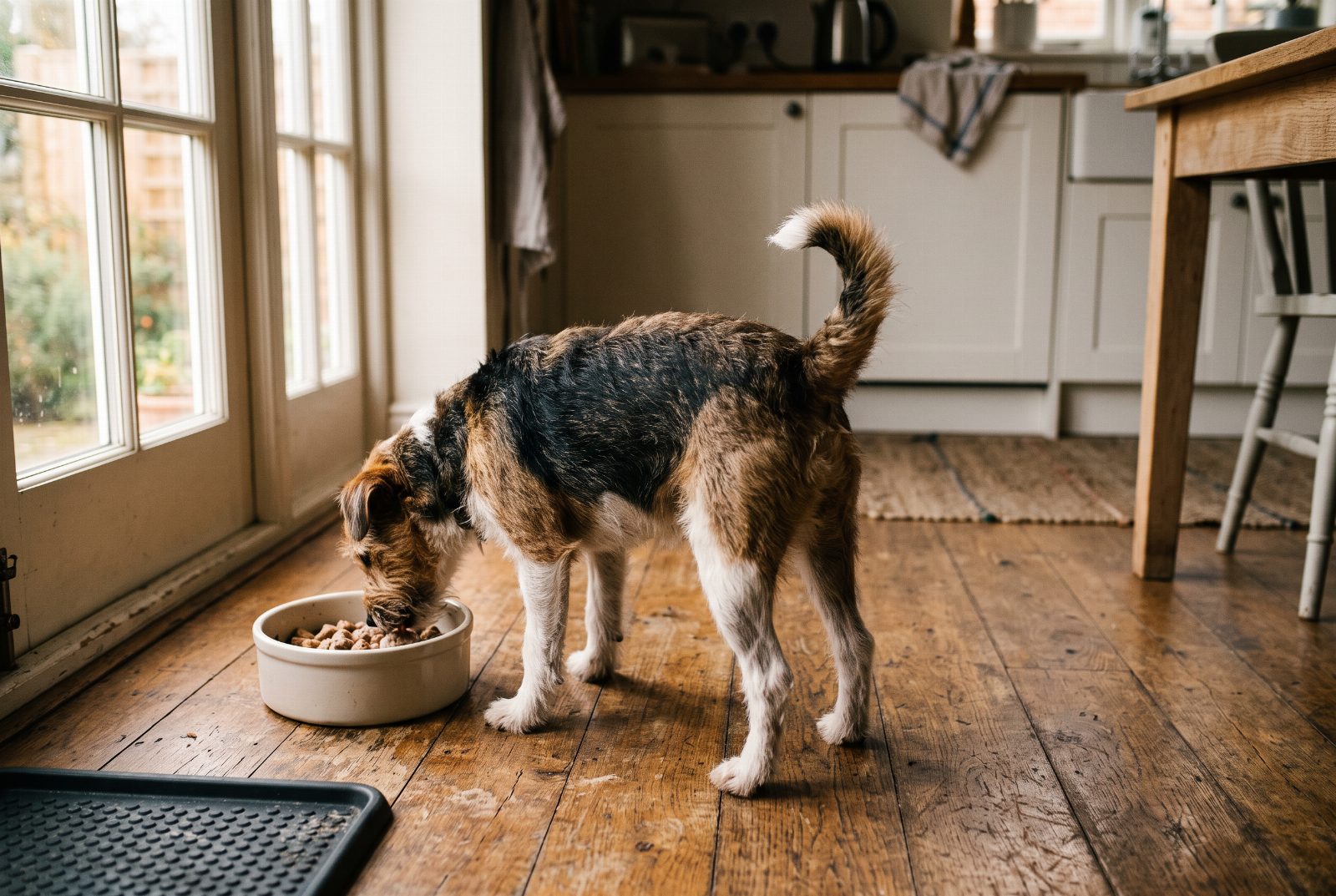
A dog who hesitates often has a very ordinary reason: the temperature, the texture, a food that barely smells of anything, a bowl placed in the middle of a walkway, or a switch that went too quickly. Before anyone talks about character, it pays to work through those things.
A dog decides at the bowl with his nose first. That is why composition is not a footnote for us, it is the actual message.
Our dog line is called Dog’s. The duck recipe declares 31% duck breast, 29% chicken breast, 12% chicken liver and 8% chicken heart. Together that is 80% meat and offal, followed by 5% egg, vegetables, fruit and oils.
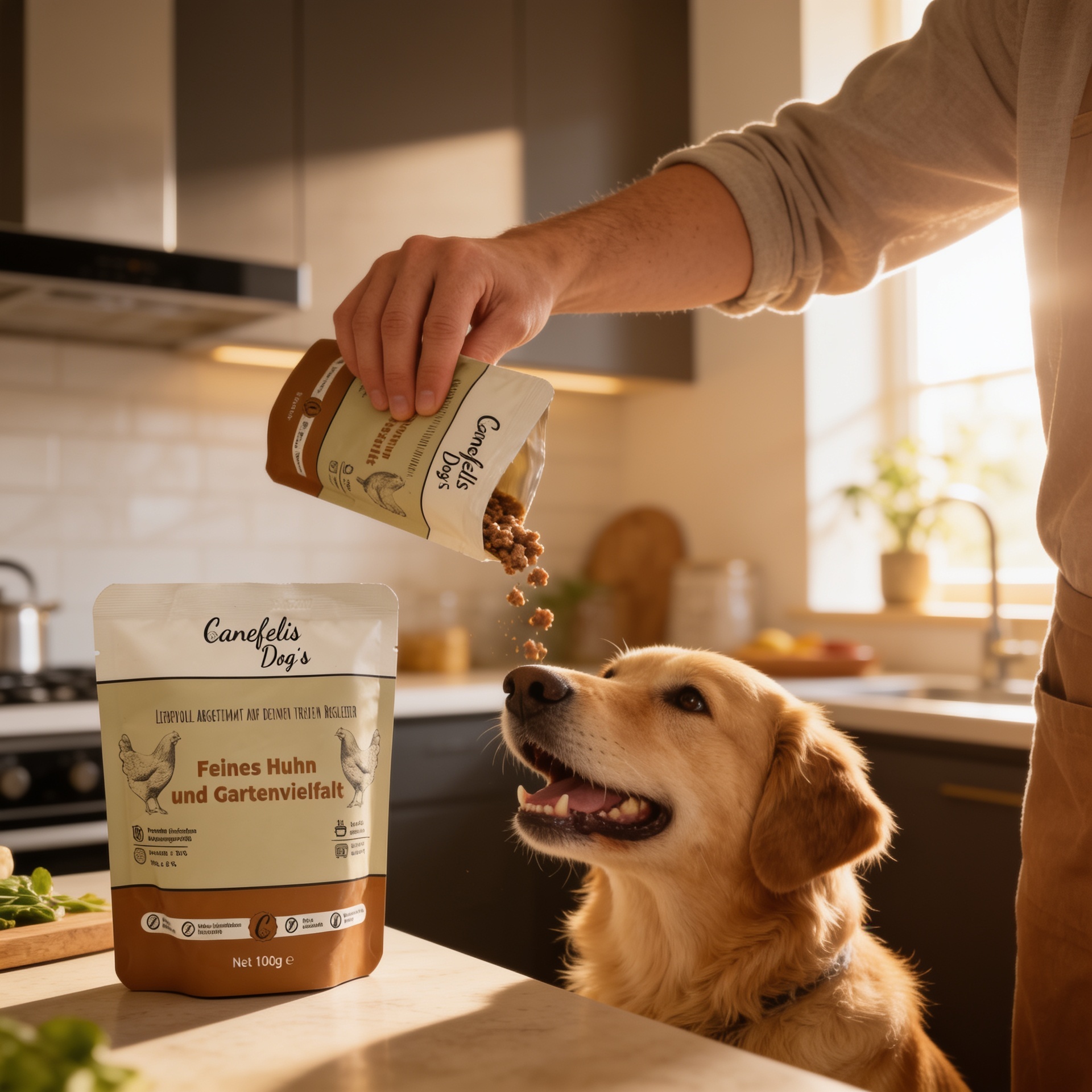
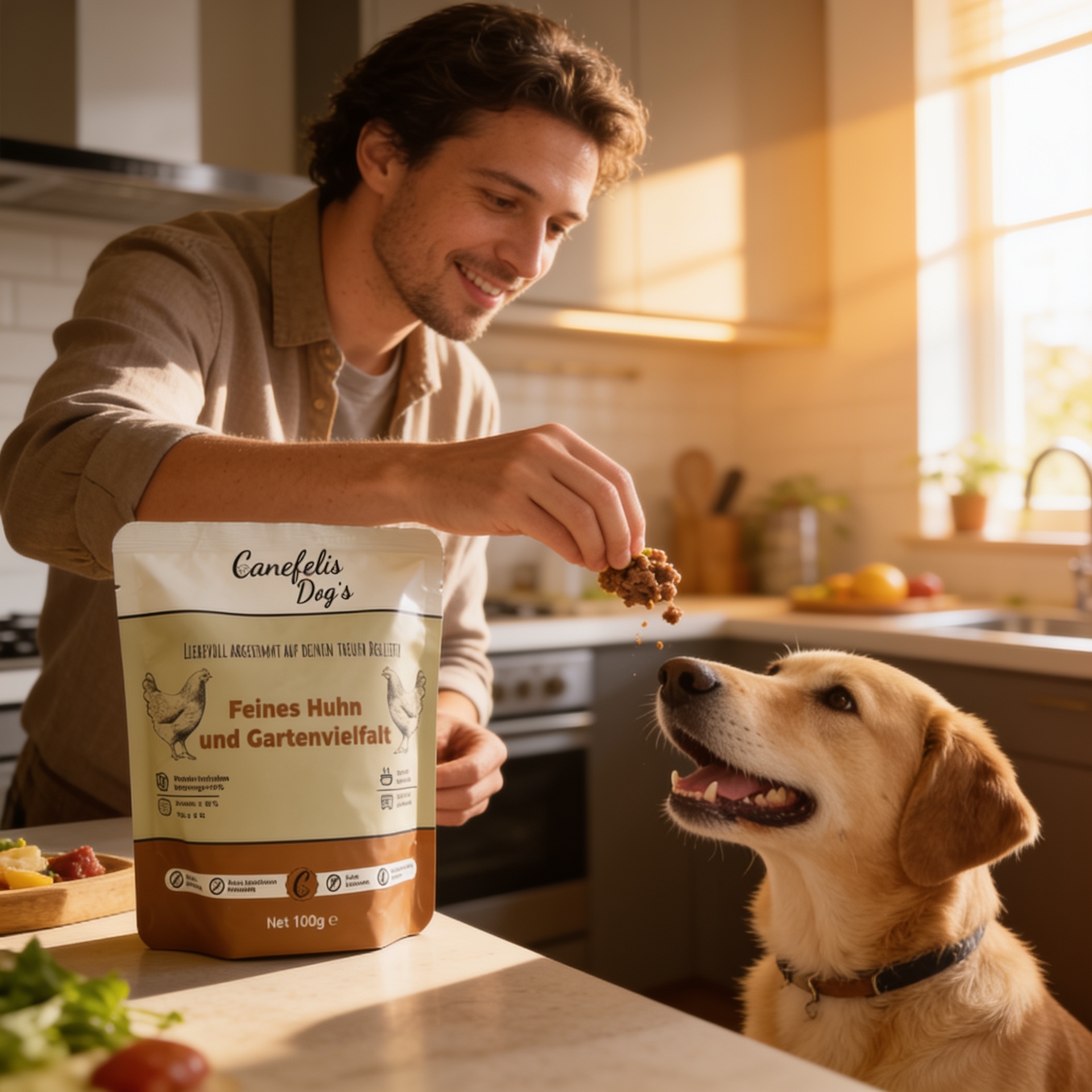
Canefelis offers gently baked soft food for dogs with a soft, moist texture. See each recipe for its composition.
Follow the storage instructions and best-before date on the packaging.
Our rule is simple. What it says on the pack is what is in the pack. You do not have to take our word for it, you can count it up on the label.
Frequently Asked Questions (FAQ)
Can dogs cry?
Dogs produce tears to protect the eye, but they do not cry visibly to express emotion as people do. They more often show grief or strain through behaviour, sleep, activity and changed habits. A watery, red or sticky eye should be examined by a veterinarian rather than interpreted emotionally.
Can my dog sense that I am pregnant?
A dog does not recognise pregnancy as a medical diagnosis. He can notice changes in scent, posture, movement, sleep and daily routine. Some dogs seek more contact or become more watchful. That is a response to new signals, not confirmation of pregnancy or a prediction.
Do dogs react to a full moon?
There is no convincing evidence that a full moon directly changes canine behaviour. Brighter night light, more visible outdoor movement and a changed evening routine can still affect a dog. Check the environment and routine first. The moon alone does not reliably explain restlessness or activity.
Can a dog sense when a person is dying?
There is no reliable evidence that dogs predict death. During serious illness, scents, medication, sounds, visitors, routines and human mood can all change. A dog may respond to those signals. His behaviour reflects perception of change, not a medical finding or a dependable oracle.
Can dogs tell time?
Dogs use recurring cues such as light, sounds, scents and household routines. A study comparing shorter and longer absences found differences at reunion, but it did not prove a human-like internal clock. Dogs appear to perceive duration partly, while the exact mechanism remains unclear.
How long does a dog remember an event?
Dogs can remember actions and events, but there is no single general time limit. In one experiment, dogs unexpectedly recalled observed actions after one minute and after one hour. Performance declined with time, and everyday memories may work differently from this controlled task.
Why does a dog sigh?
A sigh may occur while settling to rest, after tension or during a social situation. The sound alone does not identify one emotion. Look at posture, breathing and context. Frequent or laboured sighing together with other unusual signs should be discussed with a veterinarian.
Why does a dog tilt his head?
Head tilting may relate to attention and processing a familiar word. A small study found it more often in dogs that learned object names well, but it does not establish a general rule. Repeated one-sided tilting with balance problems or discomfort needs veterinary assessment.
Which dog coat colour is the calmest?
No coat colour is reliably the calmest. Behaviour develops through genetics, early experience, socialisation, training and daily life. Anyone choosing a dog should observe the individual in several situations and ask carers about behaviour. A colour chart cannot replace that assessment.
Are light-coloured dogs more sensitive?
Light fur alone does not make a dog generally more sensitive. Specific areas with little pigment and thin hair may react more strongly to intense sunlight. This is neither a personality issue nor a food issue. Individual protection should be discussed with a veterinarian.
Can my dog sense that a baby is coming?
A dog does not know that a baby is coming. He notices new furniture, scents, sounds, visitors and changed routines. Introduce changes early and gradually when possible. Qualified behavioural advice can help prevent everything unfamiliar from beginning on the day the baby arrives.
Related reading
Curious about the texture?
If you want to compare the soft-baked texture yourself, see the Canefelis trial packs for dogs. The decision stays with you and your dog.
Sources
- Dogs can discriminate human stress odours (PLOS ONE)
- Dogs recognise dog and human emotions (Biology Letters / PubMed)
- Storm-associated noise aversion in dogs (PMC)
- Coat colour and behaviour in Labrador retrievers (PMC)
- Genetic basis of coat variation in domestic dogs (PMC)
- Tear volume after reunion with owners (Current Biology)
- Fugazza et al.: Episodic-like memory in dogs
- Sommese et al.: Head-tilting in dogs
- Wenden et al.: Dogs and preschool social-emotional development
And What About Your Dog?
At the next apparently magical moment, note scent, sound, routine and body language first. A vague impression can become a useful observation about your dog. Share the story if you like, but do not turn one experience into a certain rule.