Dog Not Eating: Causes, What You Can Do, and When It Gets Serious


You put the bowl down. Your dog sniffs it and turns away. Another untouched meal can leave you wondering what to do next.
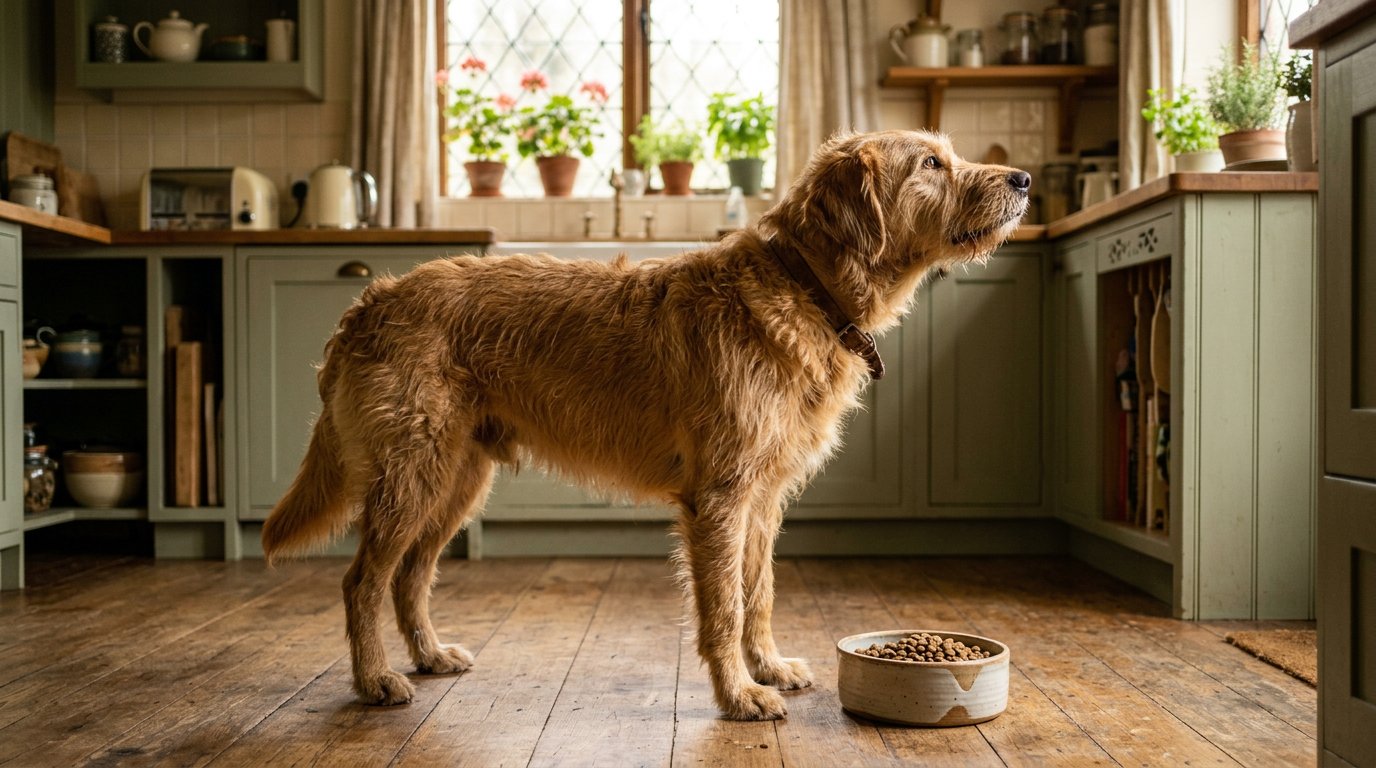
A missed meal is not a judgment on you as an owner. But a change in appetite deserves attention, even if your dog still seems interested in treats.
This guide looks at possible health concerns, routine, the feeding environment and preferences. Start with the warning signs before trying changes at home.
The aim is a clear record of what is happening, not a diagnosis from a food bowl.
First: when should you contact your vet?
Appetite can vary, but you cannot tell from a missed meal alone whether the cause is harmless. Contact your vet if your dog stops eating or their eating habits change.
🩺 When to seek veterinary advice
Get advice promptly, particularly when:
- your dog is refusing food or eating substantially less than usual;
- vomiting, diarrhoea, weakness, shaking or signs of pain occur;
- drinking, weight or behaviour changes noticeably;
- the dog is a puppy, has a medical condition or is otherwise vulnerable.
Do not wait for a fixed time limit if your dog seems unwell. These practical feeding ideas are for use after health concerns have been considered, not instead of veterinary care.
Preference or loss of appetite?

Watch the overall pattern rather than relying on a single test.
A dog may refuse a meal and still take a favourite treat. Preference or learned behaviour may contribute, but so can discomfort. It does not prove that appetite and health are normal.
A dog that loses interest in all food, seems tired or withdraws needs veterinary attention. Make a note of when the change began.
There is no reliable “treat test” for ruling out illness. Tell your vet both what your dog refuses and what they still accept.
Possible reasons your dog is not eating
The following groups can help you organise your observations. They can overlap, and they are not a way to diagnose your dog at home.
1) Health-related causes
Dental discomfort, pain, nausea and other illnesses can affect eating. A dog choosing softer food or dropping pieces may need a mouth examination, not simply a different recipe.
Changing food does not treat an underlying illness. If pain or another health problem is possible, ask your vet before experimenting with the diet.
2) Changes in surroundings and routine
Moving home, a new family member, another animal or altered meal times may coincide with a change in eating. Note these events and aim for a calm routine without assuming they explain everything.
3) Feeding habits and food condition
- Treats: count snacks and table food as well as the main meals.
- Food left available: record what is offered and what is actually eaten throughout the day.
- Food condition: check storage instructions and discard food that appears spoiled.
- Temperature: a refrigerated meal may be less appealing than a room-temperature portion.
- A sudden change: unfamiliar food may be refused, so plan transitions gradually.
4) Taste and texture
Dogs have individual preferences for smell, taste and texture. A soft, moist food is one format, not a guarantee of acceptance or a treatment for poor appetite.
Puppies, adult dogs and older dogs
Age and medical history affect the advice your dog needs.
If a puppy refuses food, contact your vet promptly. Do not assume it is only teething or attempt to solve the problem by waiting for hunger.
For adult dogs, record meals, snacks and recent changes. This information helps your vet assess the pattern.
For an older dog, a new preference for soft food or a change in appetite also deserves assessment. Do not put it down to age alone.
“My dog eats treats but not meals”
A dog can be alert when treats appear while still having a problem with normal meals. Treat interest is useful information, but not a clean bill of health.
Frequent extras can also complicate the picture. Keep an honest record of small bites, food used for training and anything offered by other family members.
Once your vet has addressed health concerns, agree on a consistent feeding approach rather than repeatedly adding more choices.
Changing food step by step

The table below is an illustrative transition schedule, not a prescription. Follow your vet’s advice and the product instructions, particularly for a dog on a prescribed diet.
| Day | New food | Familiar food |
|---|---|---|
| Days 1–2 | About 25% | About 75% |
| Days 3–4 | About 50% | About 50% |
| Days 5–6 | About 75% | About 25% |
| Days 7–10 | 100% | 0% |
Monitor how much your dog eats and any changes in stool or behaviour. If problems occur, ask your vet how to proceed rather than increasing the new food automatically. The schedule can be adjusted to the individual dog.
5 habits that can make the pattern harder to understand
These are practical checks, not reasons to blame yourself or your dog.
- Changing recipes at every refused meal makes it difficult to see a consistent pattern.
- Adding toppings repeatedly can hide how much of the complete food is being eaten.
- Offering more and more alternatives makes it harder to measure total intake.
- Watching closely, prompting or crowding the bowl may create an unsettled feeding environment.
- Serving a large portion can make small changes in intake harder to spot.
Keep the plan simple and record the results. Consistency should never mean withholding food from a dog that is not eating adequately.
9 practical feeding checks
Choose a manageable few after discussing appetite changes with your vet. Stop and seek advice if your dog’s intake or condition worsens.
- Offer meals on a routine appropriate to your dog, without using prolonged hunger to force acceptance.
- Measure treats and include them in the daily intake record.
- Ask everyone in the household to record extras rather than feeding unnoticed table scraps.
- Try a small room-temperature portion. If warmed, stir it and check that it is not hot.
- Follow the pack’s refrigeration and use-after-opening instructions.
- Consider texture as a preference, not as a way to avoid investigating chewing discomfort.
- Make any planned food change gradually, following appropriate guidance.
- Choose a quiet, consistent feeding spot with space from other animals.
- Keep to your dog’s usual suitable activity routine; exercise is not a treatment for appetite loss.
Be patient, but keep observing. A feeding routine should support your dog, not delay a veterinary assessment.
Smell, taste and texture
Your dog’s reaction to a recipe is individual. An attractive description on a pack cannot predict what will happen at mealtime.
Observe the response to one planned change at a time. A different smell or texture may be worth exploring when appropriate, but no food can promise an empty bowl.
What to check on the label
Read the composition, intended life stage and feeding directions. Named ingredients give you details to compare; broader category names are not by themselves proof of poor quality.
Our quick check: look for the stated ingredients and percentages, the analytical panel and whether the food is complete. Our article on animal by-products explains label terminology in more detail.
When the bowl or location may matter

Check whether the bowl moves, makes noise or is awkward for your dog to use. These observations can help you discuss a suitable setup.
A busy doorway, noisy appliance or another animal close by may make the location uncomfortable. Offer space without isolating a dog that becomes distressed.
Try a stable, clean bowl at a comfortable height. Ask your vet about any special positioning needs rather than raising the bowl automatically.
Change one detail at a time and record the response. Improvement is useful information, not proof that health concerns are excluded.
Your dog eats only with you nearby or from your hand
Some dogs eat more readily with a familiar person nearby. Note when this happens and whether the behaviour is new.
Keep the situation calm and avoid turning each meal into a pressured interaction.
If being alone also causes obvious distress, discuss it with your vet or a qualified behaviour professional. Feeding changes alone may not address the problem.
Ask for an individual plan if your dog consistently depends on hand-feeding or your presence. Avoid abrupt changes that leave them eating too little.
After surgery, anaesthesia or treatment
Follow the discharge and feeding instructions from the clinic. What is appropriate depends on the procedure and your dog’s condition.
Report appetite changes after medication, vaccination or other treatment to the practice rather than assuming they are harmless.
Offer food and water as directed by the treating team. Do not force food or change a prescribed diet without advice.
Contact the clinic promptly if eating does not resume as expected, or if your dog seems weak, vomits or appears in pain. The clinic’s instructions take priority over a general article.
Hot weather and appetite
If your dog eats less during hot weather, record the change without assuming heat is the only cause.
Provide a cool resting place and fresh water. A quieter, cooler time of day may be more comfortable for offering a meal.
Follow food-safety and storage instructions, and do not leave perishable food standing in the heat.
If your dog seems unwell, cannot drink normally or shows signs of overheating, seek urgent veterinary help rather than waiting for the next meal.
Your dog refuses dry food but accepts wet food
This pattern may reflect texture preferences, but it can also occur with chewing discomfort. It is not a sign of stubbornness that should be tested with hunger.
Tell your vet if your dog avoids hard pieces, drops food or changes the way they chew.
If a texture change is suitable, choose a complete food for your dog’s needs and follow the feeding guide.
Ask whether moistening the current food is appropriate. Do not add stock or other ingredients without checking their suitability, especially with a prescribed diet.
Practical support at home
Once your vet has advised on the cause, keep home changes simple and easy to monitor.
A small room-temperature portion and a clean, quiet feeding space are straightforward details to review.
Do not replace a complete diet with a homemade recovery diet unless your vet advises it. Ask what to feed, how much and for how long.
Do not use unsuitable seasonings or repeated rich toppings, and do not force-feed without veterinary instruction.
If the plan is not working, contact the practice again instead of trying an endless sequence of recipes.
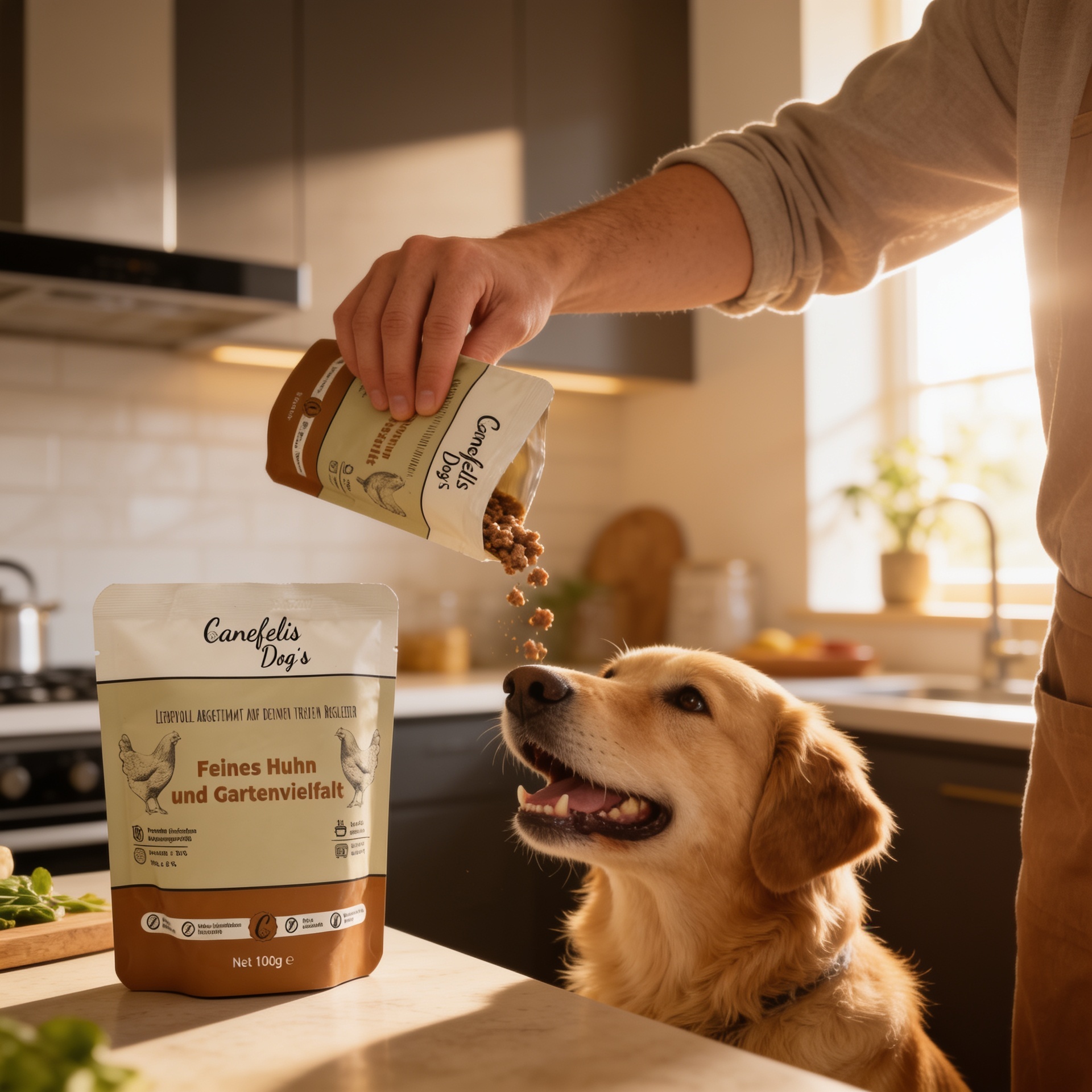
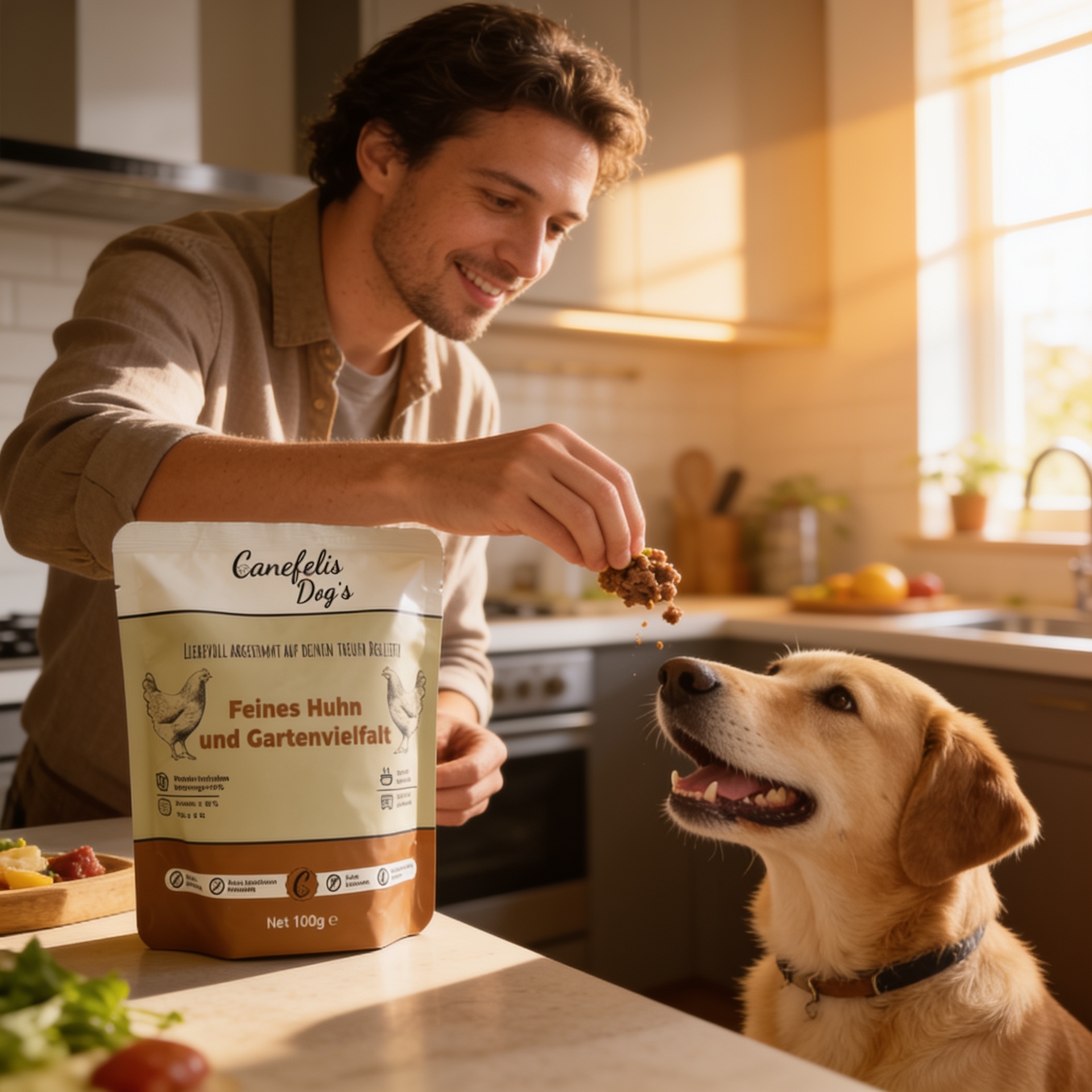
Exploring Canefelis recipes
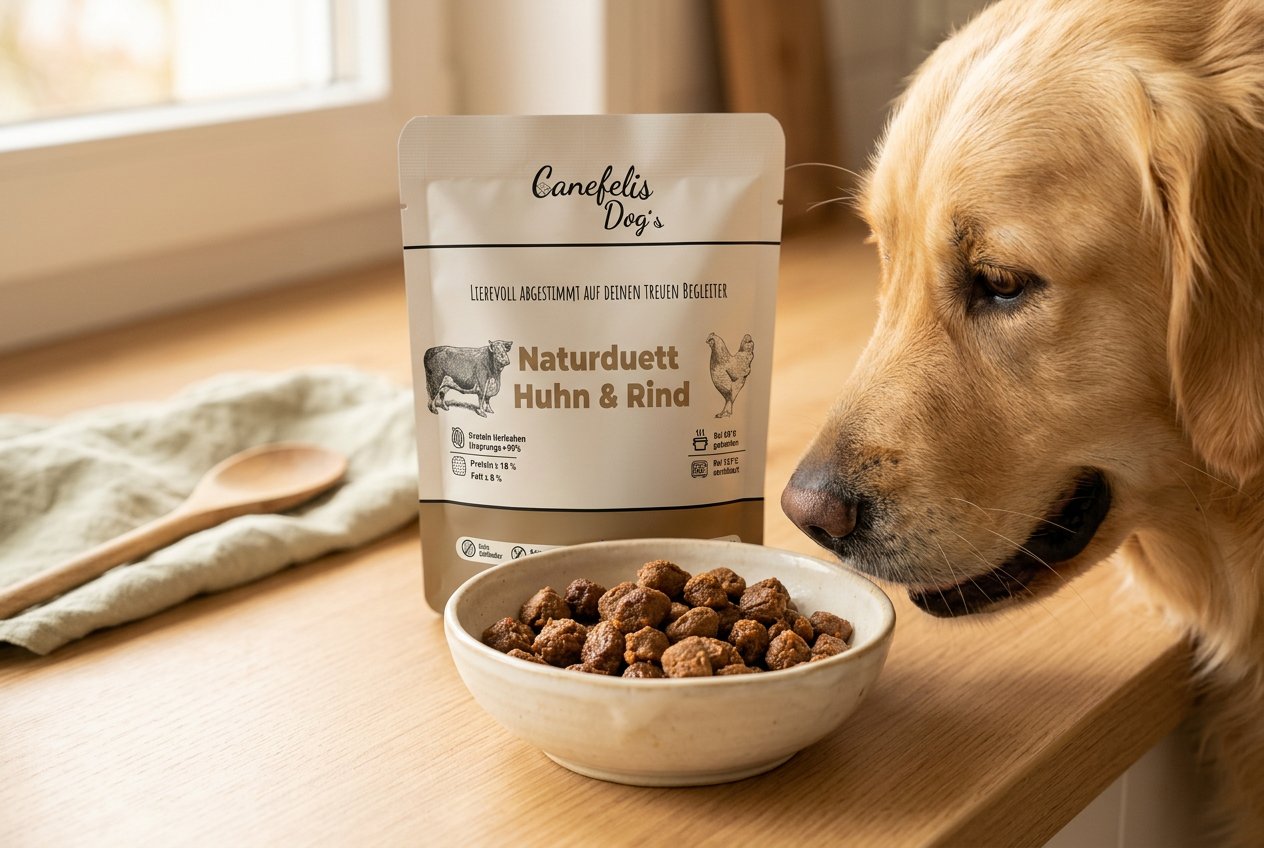
Trying a new recipe can be useful when a diet change is appropriate. It cannot guarantee that your dog will accept the food.
Canefelis trial packs let you explore different recipes. Check the current pack sizes, composition and prices on the product pages rather than relying on an old offer in a blog article.
Read the declaration for each recipe and introduce any change gradually. Your dog’s individual response matters.
What if a cat stops eating?
Cats need their own feeding advice. If your cat stops eating, contact your vet promptly rather than applying a dog’s feeding routine or waiting for hunger to take over.
Frequently asked questions
Why has my dog stopped eating even though they seem lively?
Routine, preferences and health can all be relevant. Looking lively does not rule out illness. Record the change and contact your vet for advice.
How long should I wait if my dog stops eating?
Ask your vet promptly rather than using a fixed waiting period. Puppies and dogs that seem unwell or have existing conditions need particular attention.
My dog eats only treats. What should I do?
Record all food offered and eaten. Treat acceptance does not rule out illness, and treats should not replace a complete diet. Discuss the pattern with your vet.
Could a different food help a dog with preferences?
A different recipe or texture may be an option after health concerns are addressed. Introduce it gradually; acceptance is not guaranteed.
Should I warm the food?
You can try serving it at room temperature if appropriate. Follow the storage instructions, avoid hot spots and never serve it hot.
My dog eats grass instead of meals. Should I worry?
Tell your vet if grass eating accompanies food refusal, vomiting or a change in behaviour. Do not assume it explains or treats the appetite problem.
My dog is not eating and drinks much more. Is that important?
Yes. Report the combination to your vet promptly, including when it began and any other changes you have noticed.
Is one meal a day suitable for every dog?
No single schedule suits every dog. Use the feeding guidance for the food and your dog’s age, and ask your vet about individual needs.
My dog will not take a tablet. What can I do?
Ask the prescribing practice how to give it. Only hide, crush or mix medicine with food if they confirm it is appropriate for that medication.
Should I force-feed my dog?
Not without veterinary instruction. If your dog is not eating, seek help with the cause and a safe feeding plan.
What have you noticed about your dog?
A record of meal times, amounts and recent changes can help when you speak to your vet. Comments on a blog are not a substitute for that advice.
Planning to try a new recipe?
Explore the current Canefelis trial packs and read the recipe information before choosing.
P.S. Trying a food is a way to explore preferences, not a promise of acceptance.
Further reading: PDSA: changes in a dog’s appetite.
Our bestsellers


€ 16,21 € 14,58 / kg
incl. 13% VAT
plus shipping costs
Contents: 1,2 kg


€ 16,21 € 14,58 / kg
incl. 13% VAT
plus shipping costs
Contents: 1,2 kg