Animal By-Products in Dog Food: What They Really Mean

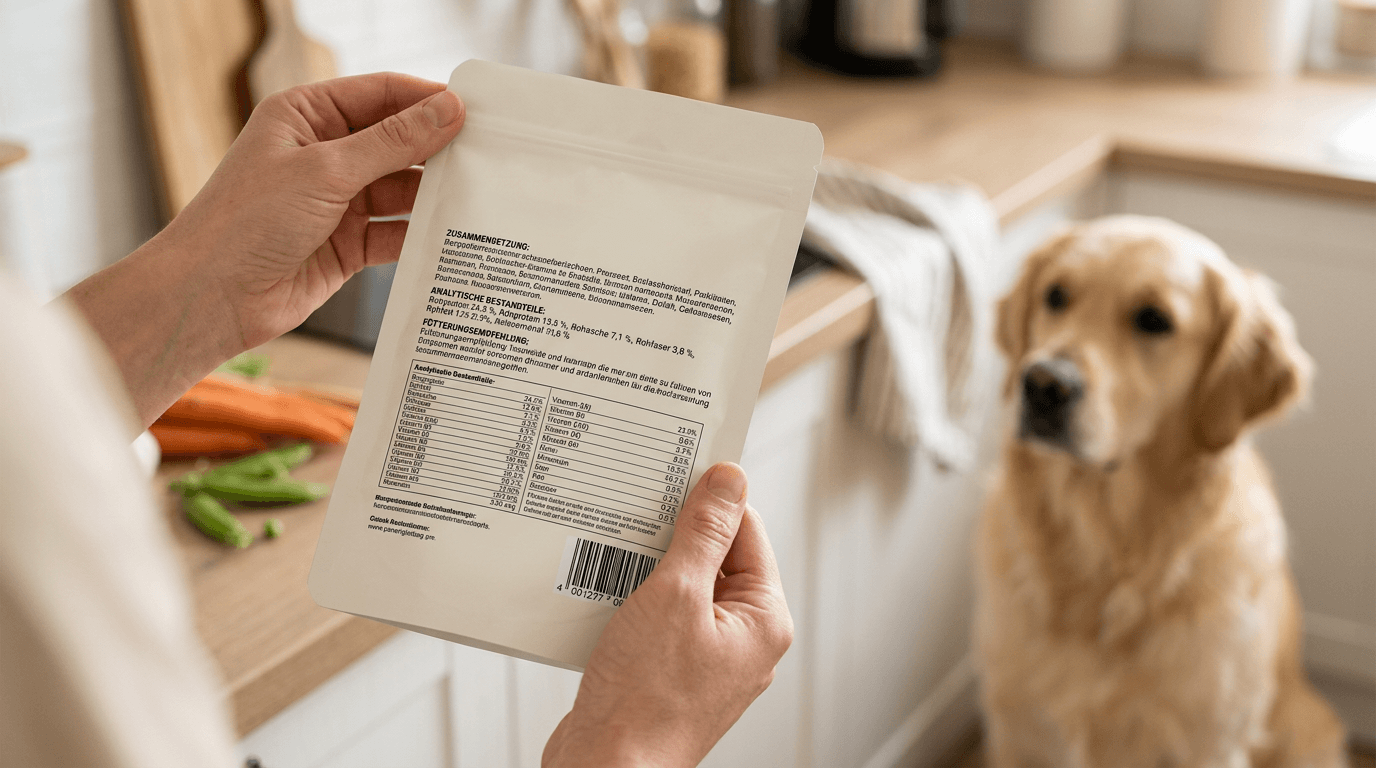
You turn over a pack and read “meat and animal derivatives”. What does that tell you about the recipe, and what information would help you understand it better?
A category name can be unfamiliar without being misleading. The useful next step is to look at the complete label, rather than judge the food by a single phrase.
This guide explains the main terms and gives you a practical checklist. A quick first look can help you identify questions, but it cannot establish a food’s overall quality or suitability on its own.
Let’s start with the term that often raises the most questions.
What does “animal by-products” mean?
The term covers animal materials not intended for human consumption. In pet food, these can include organs such as liver, heart, lungs and kidneys.
The name alone is not a quality rating. The ingredients used, their processing and the finished formulation all matter.
An individual ingredient list can tell you more about the animal species and tissues in a recipe. If the label leaves a question unanswered, ask the manufacturer for details.
Individual ingredients and category names
Labels may list ingredients individually or use permitted category descriptions. These are different ways of presenting the composition.
A more detailed list might name duck breast, chicken breast and liver separately, with percentages for specified ingredients. This helps you compare the stated recipes.
A category-based list may use terms such as “meat and animal derivatives” or “cereals”. It provides less detail about individual ingredients, but that alone does not establish poor quality.
Read the ingredient list together with the food type, intended life stage and feeding instructions. Keep a note of anything you want the manufacturer to clarify.
Looking beyond a category name
It helps to separate what the label actually says from assumptions about words that sound appealing or unappealing.
- Named organs: liver, heart, lungs and kidneys identify particular animal tissues used in a recipe.
- Broader categories: these do not identify every tissue or species individually. Ask for more information if that detail matters to your choice.
Neither an attractive ingredient name nor an unfamiliar one tells the whole story. Consider the finished food and its intended use as well.
Fresh meat and dried ingredients: comparing percentages
A larger meat percentage does not automatically make one food more suitable than another. First check what the percentage describes.
Fresh and dried ingredients contain different amounts of water. Drying concentrates the remaining material, so their listed percentages are not directly interchangeable.
Look at the recipe as a whole: the named ingredients, their form, the analytical information and the feeding guide. Avoid making a decision from one headline number.
Understanding analytical constituents
The analytical panel describes measured components of the food, such as protein, fat, fibre and mineral residue. It is separate from the list of ingredients.
Water content affects percentage comparisons between foods. “Crude ash” refers to the mineral residue measured during analysis; it does not mean ash has been added to the recipe.
For a Canefelis recipe, check the analytical values on its current product page and packaging. Use the values for that specific recipe rather than assuming all varieties are identical.
Understanding additives
An additive is not automatically an undesirable ingredient. Its name and purpose matter.
Vitamins and trace elements are examples of nutritional additives. Other additives have different functions, such as preserving the food. These categories should not be confused.
Read the declared additives and ask about anything unclear. Do not infer a product is free from additives merely because its ingredient list sounds familiar.
Complete and complementary pet food
This distinction is more useful than a general description such as “premium”.
A complete food is intended to provide the daily ration for the animal and life stage specified. A complementary food is intended to be used with other food, following its instructions.
On a German label, look for “Alleinfuttermittel” or “Ergänzungsfuttermittel”. Check the intended species, life stage and feeding directions as well.
Cereals, grain-free recipes and sugars
These terms are best read in the context of the whole formulation.
Grain-free describes a recipe choice, not a universal quality ranking. Compare the actual ingredients and the food’s intended use instead of relying on that wording alone.
If sugars are listed, that is information about the formulation. Their presence alone is not enough to judge the finished food; ask the manufacturer if you want to understand their role.
What ingredient order can tell you
The order offers useful context, but it does not answer every question.
Ingredients are listed in descending order by weight. Their water content and whether they are named individually or by category affect how you interpret the list.
Related ingredients can appear separately. Without their quantities, adding them together precisely is not possible; avoid guessing percentages that the label does not provide.
Comparing two labels
Put the packs side by side and compare the same kinds of information: intended use, composition, analytical constituents and feeding directions.
One label may answer your ingredient questions more directly than another. Record what is stated and what remains unknown, rather than treating missing detail as proof of a particular ingredient or quality level.
A quick label-reading checklist

Use these five questions as a starting point when comparing recipes:
- Are the animal species and any stated ingredient percentages clear?
- Are particular organs named, or is a broader category used?
- Do you understand the ingredients and the order in which they appear?
- Have you checked the additives rather than assumed they are absent?
- Is the food complete or complementary, and are its intended use and analytical values clear?
This checklist helps you gather information. It is not a score or a substitute for individual veterinary advice when your dog has dietary requirements.
Reading a Canefelis recipe
Apply the same questions to Canefelis: read the composition, analytical values and feeding directions for the recipe you are considering.
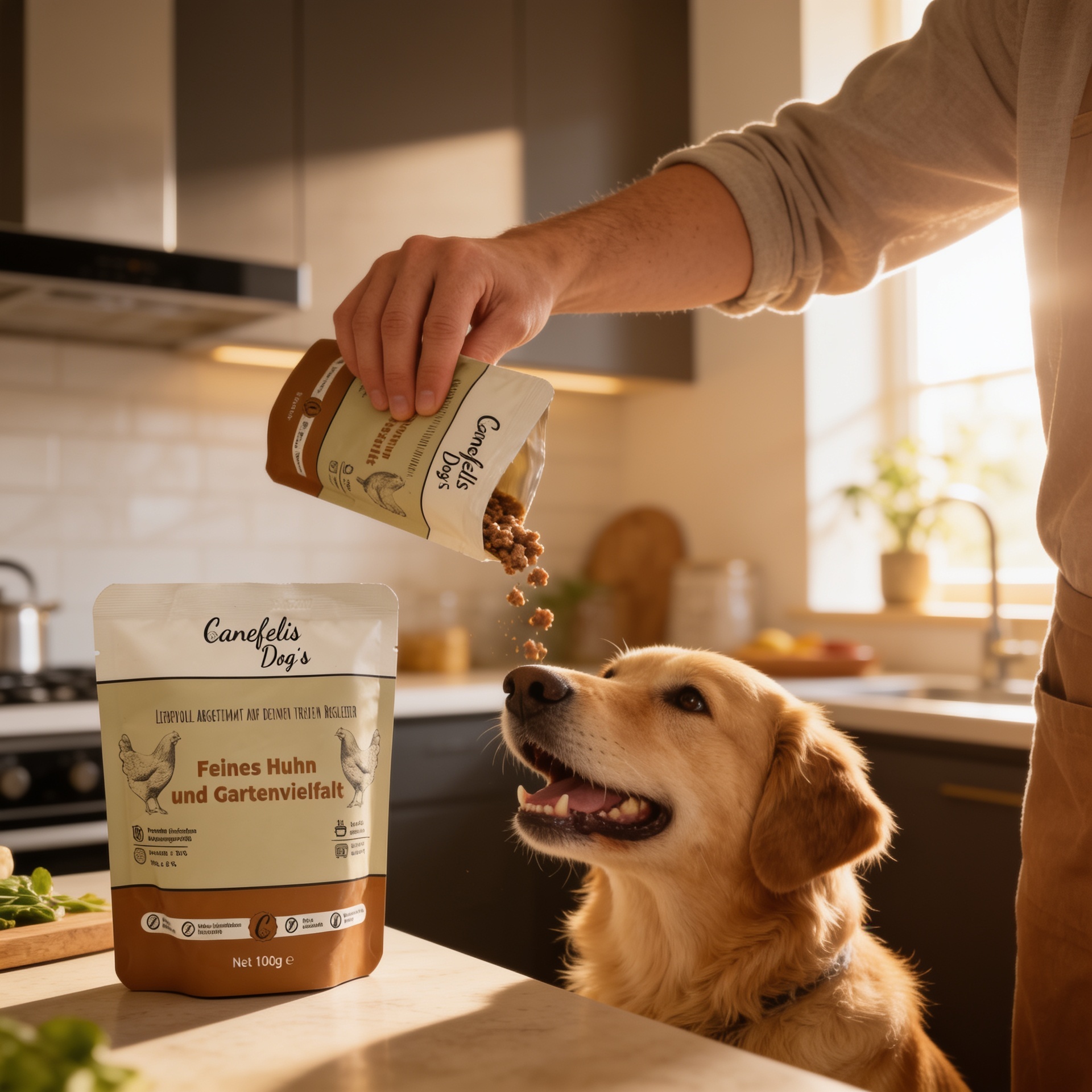
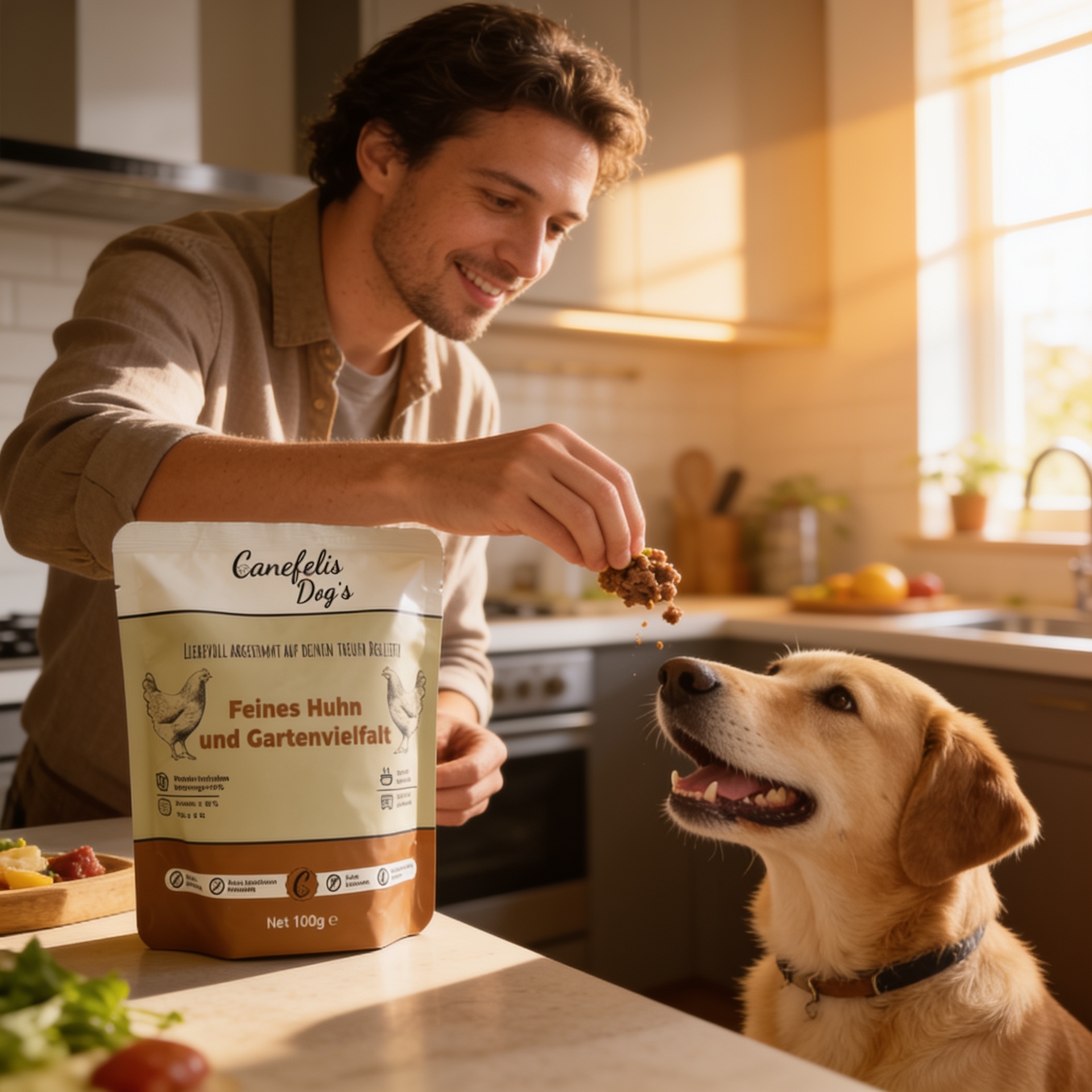
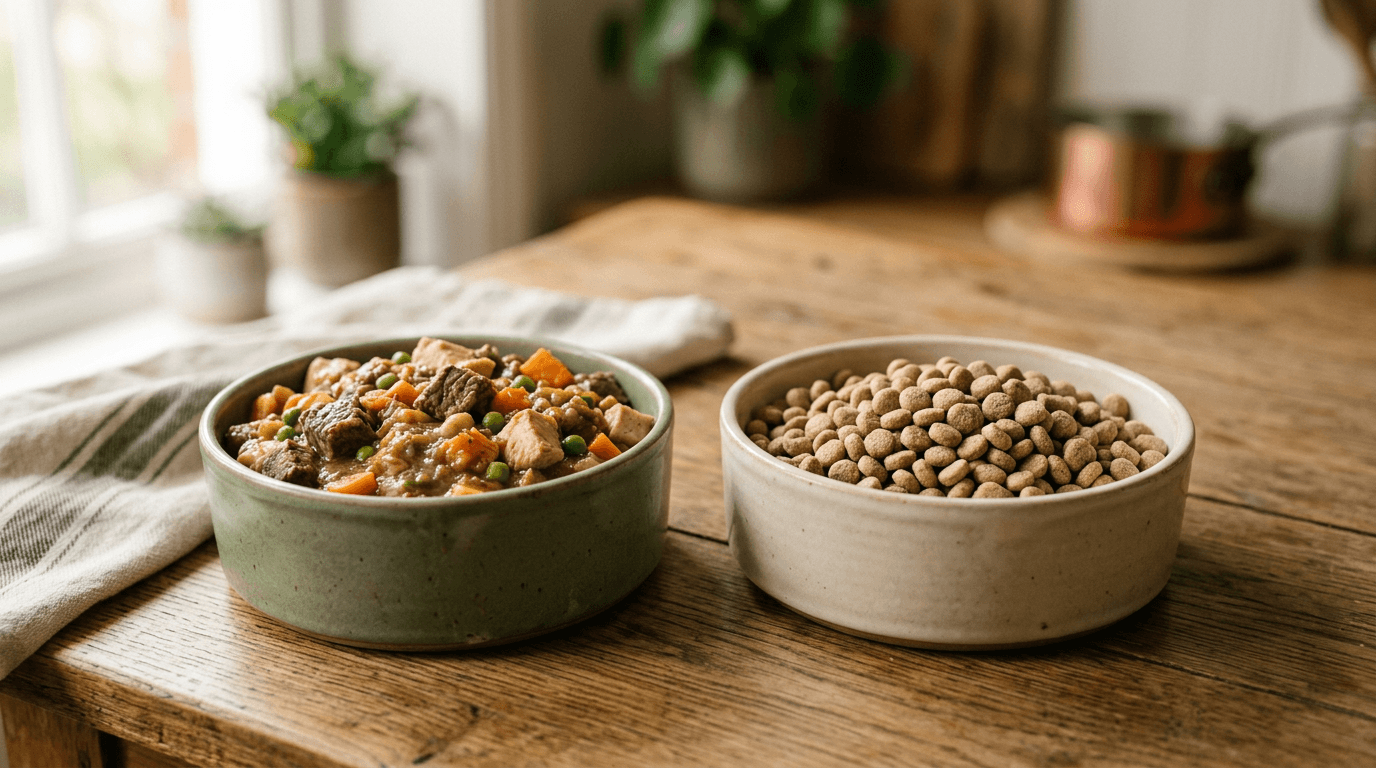
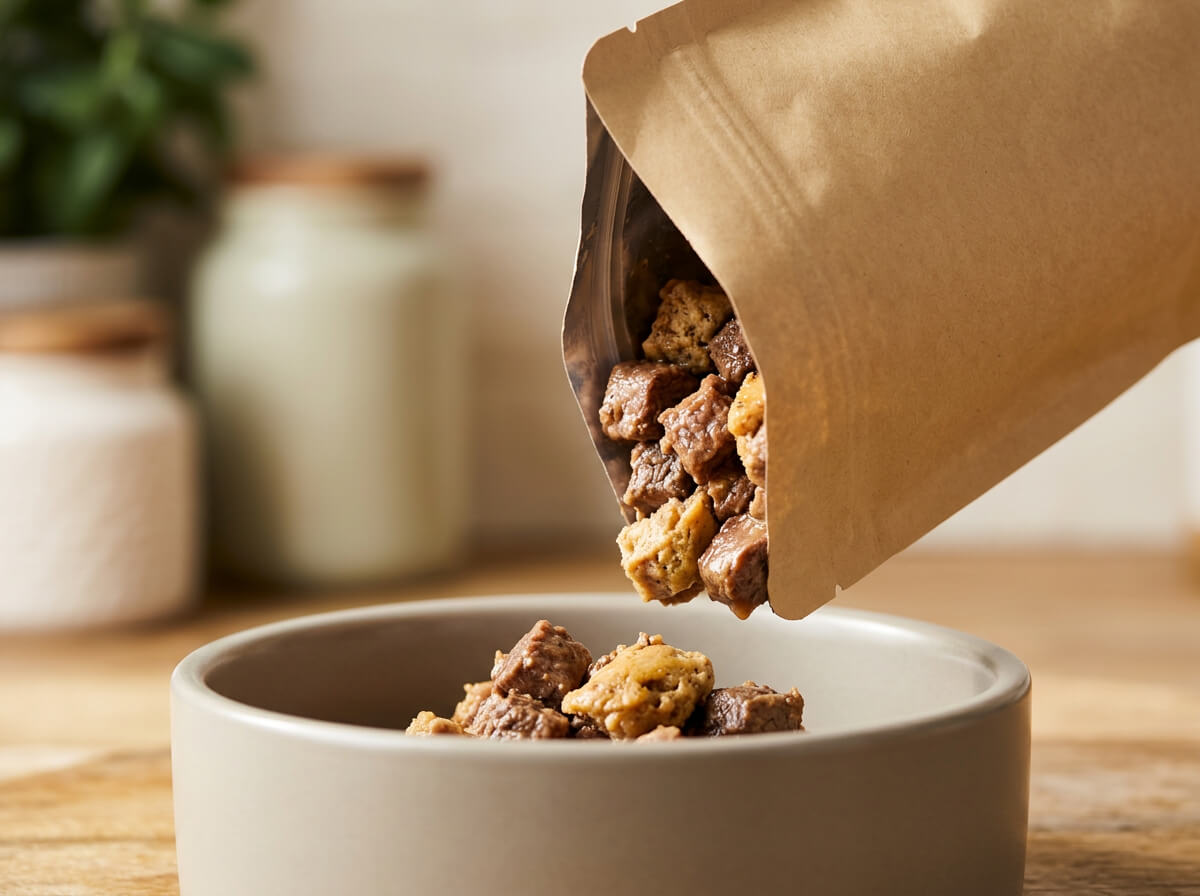
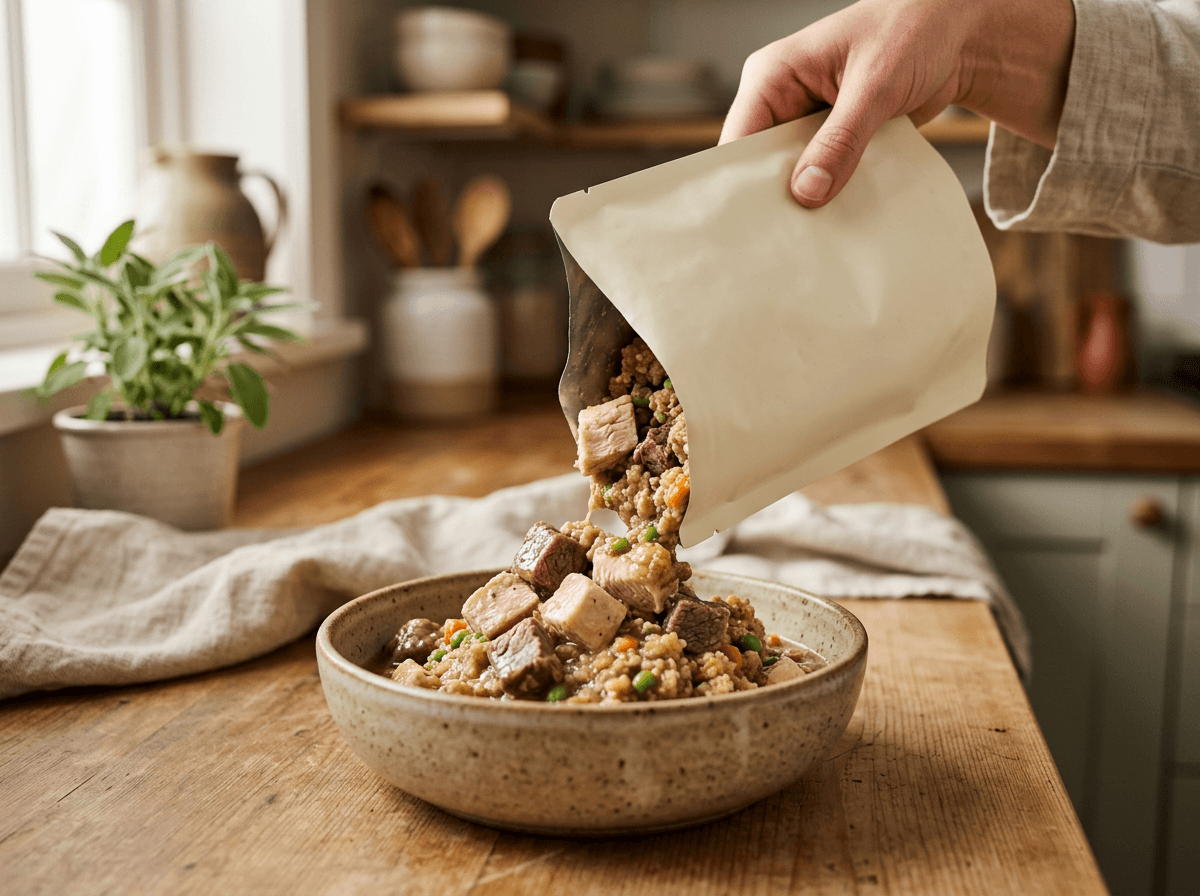
Canefelis offers gently baked soft food for dogs with a soft, moist texture. The duck recipe also contains chicken; it should not be presented as a single-protein duck recipe.
Check the current declaration on the product page and pack. If you need more detail about a particular ingredient, contact us before choosing.
Frequently asked questions
Are animal by-products necessarily bad?
No. The term alone does not establish quality. Named organs and other animal ingredients need to be considered as part of the complete formulation.
What makes a label useful?
Clear information about composition, intended use, analytical values and feeding directions helps you compare foods and identify any questions for the manufacturer.
Why are meat percentages not always directly comparable?
Fresh and dried ingredients have different water contents. Compare like with like and consider the complete recipe, rather than just one percentage.
What does “Alleinfuttermittel” mean?
It means complete pet food for the animal and life stage specified. Follow the feeding instructions; a complementary food is not intended as the sole daily ration.
Is grain-free food automatically better?
No. The wording describes the absence of cereals, not the overall suitability of the food. Look at the full formulation and your dog’s individual needs.
What are analytical constituents?
They describe components such as protein, fat, fibre and mineral residue. Moisture matters when comparing values across different food formats.
Further reading: FEDIAF: animal proteins and understanding pet food labels.
Our bestsellers


€ 16,21 € 14,58 / kg
incl. 13% VAT
plus shipping costs
Contents: 1,2 kg


€ 16,21 € 14,58 / kg
incl. 13% VAT
plus shipping costs
Contents: 1,2 kg